
Overview
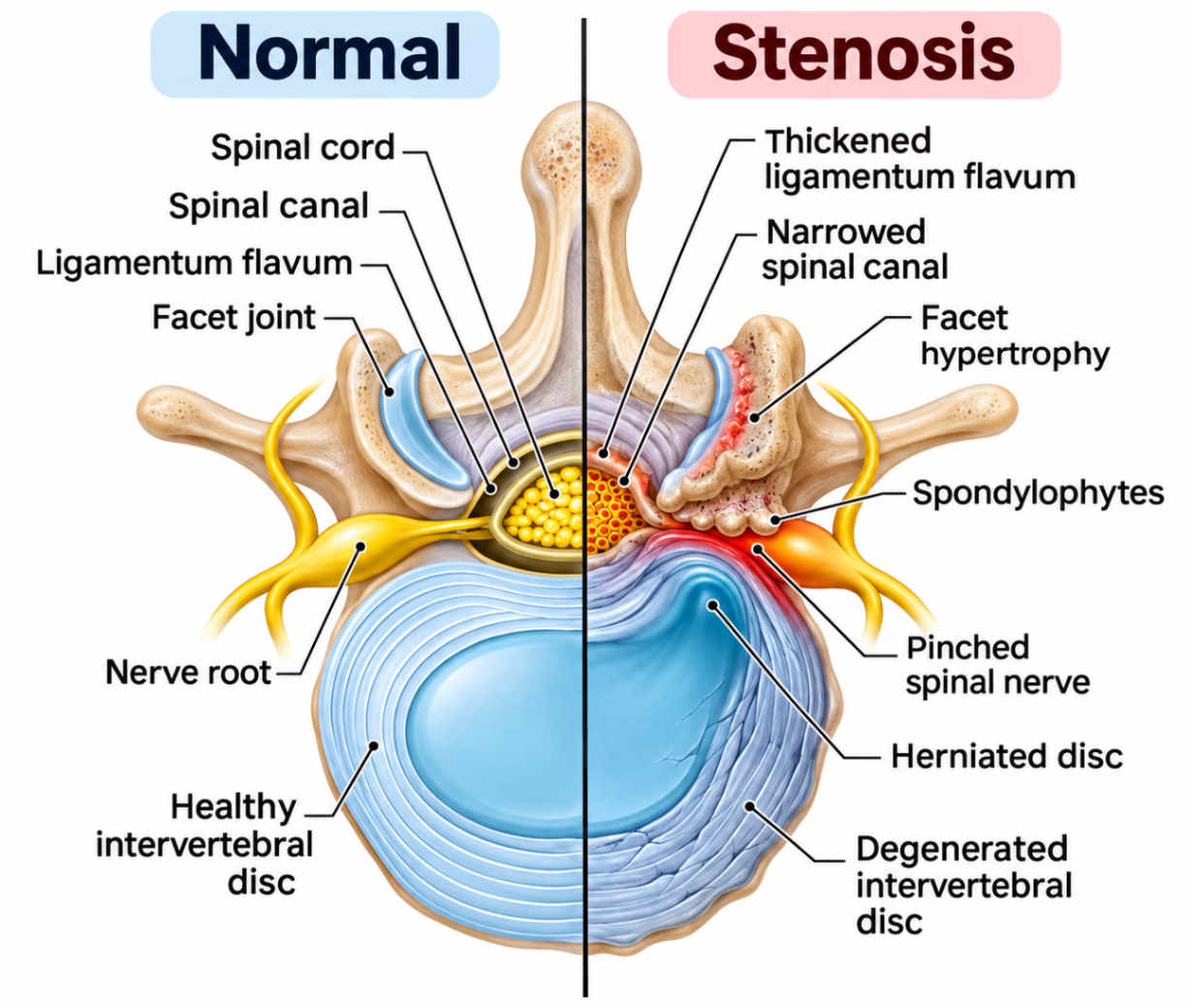
Spinal stenosis is a condition in which the spaces within the spine become narrower, putting pressure on the spinal cord or nearby nerves. It most commonly develops in the lower back (lumbar spine) or neck (cervical spine). This narrowing may cause back or neck pain, numbness, tingling, muscle weakness, and difficulty walking. Spinal stenosis is often associated with ageing and degenerative changes, although it can also develop due to injuries or other spinal conditions. Early diagnosis and appropriate treatment can help manage symptoms, improve mobility, and prevent complications in selected patients.
What Is Spinal Stenosis and What Are Its Symptoms?
Spinal stenosis occurs when the spinal canal or the openings through which nerves travel become narrowed. This narrowing may compress nerves, causing symptoms that vary according to the affected part of the spine and the degree of compression.
It most commonly affects the lumbar spine (lower back) and cervical spine (neck).
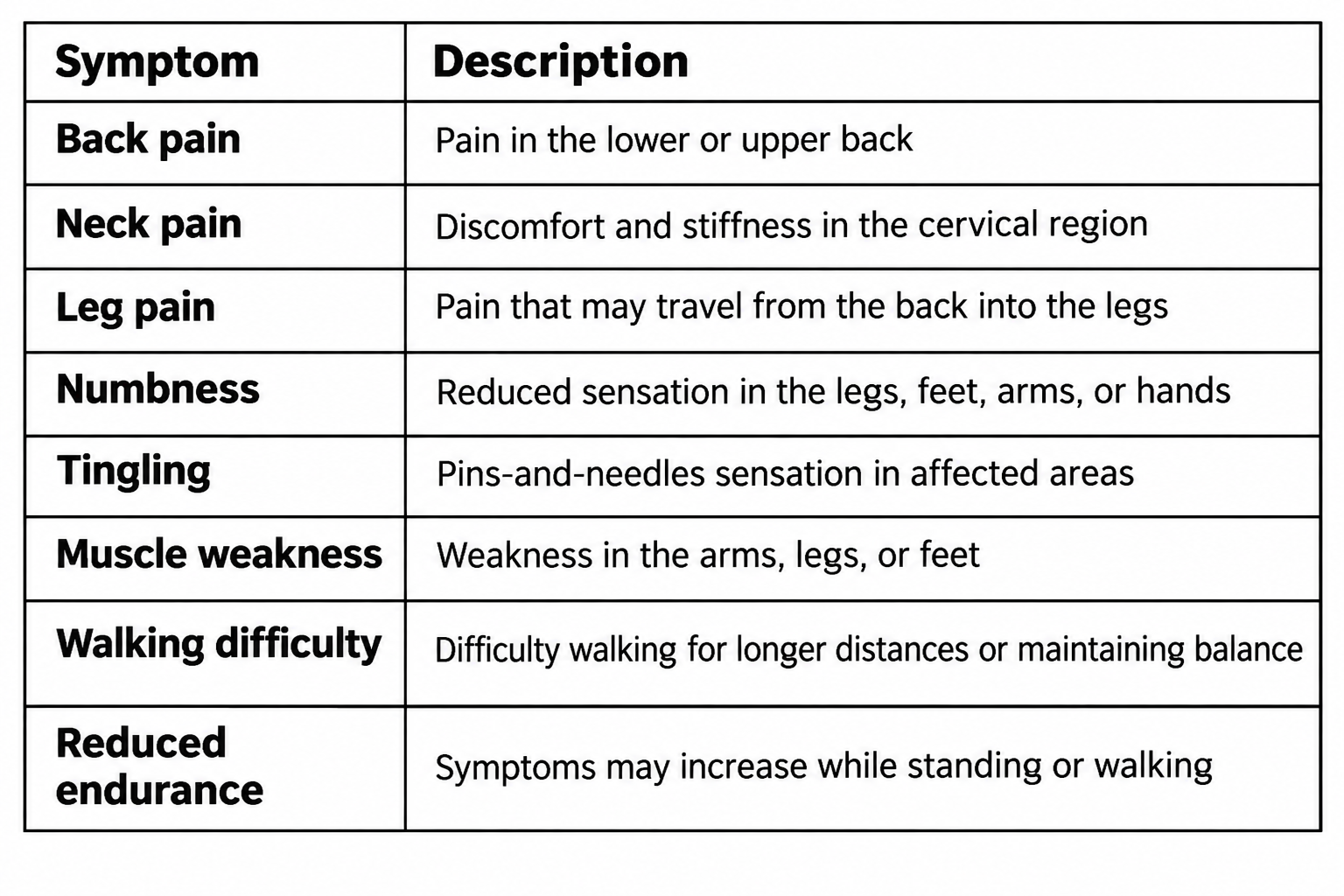
Common symptoms of spinal stenosis
Lumbar vs. cervical spinal stenosis
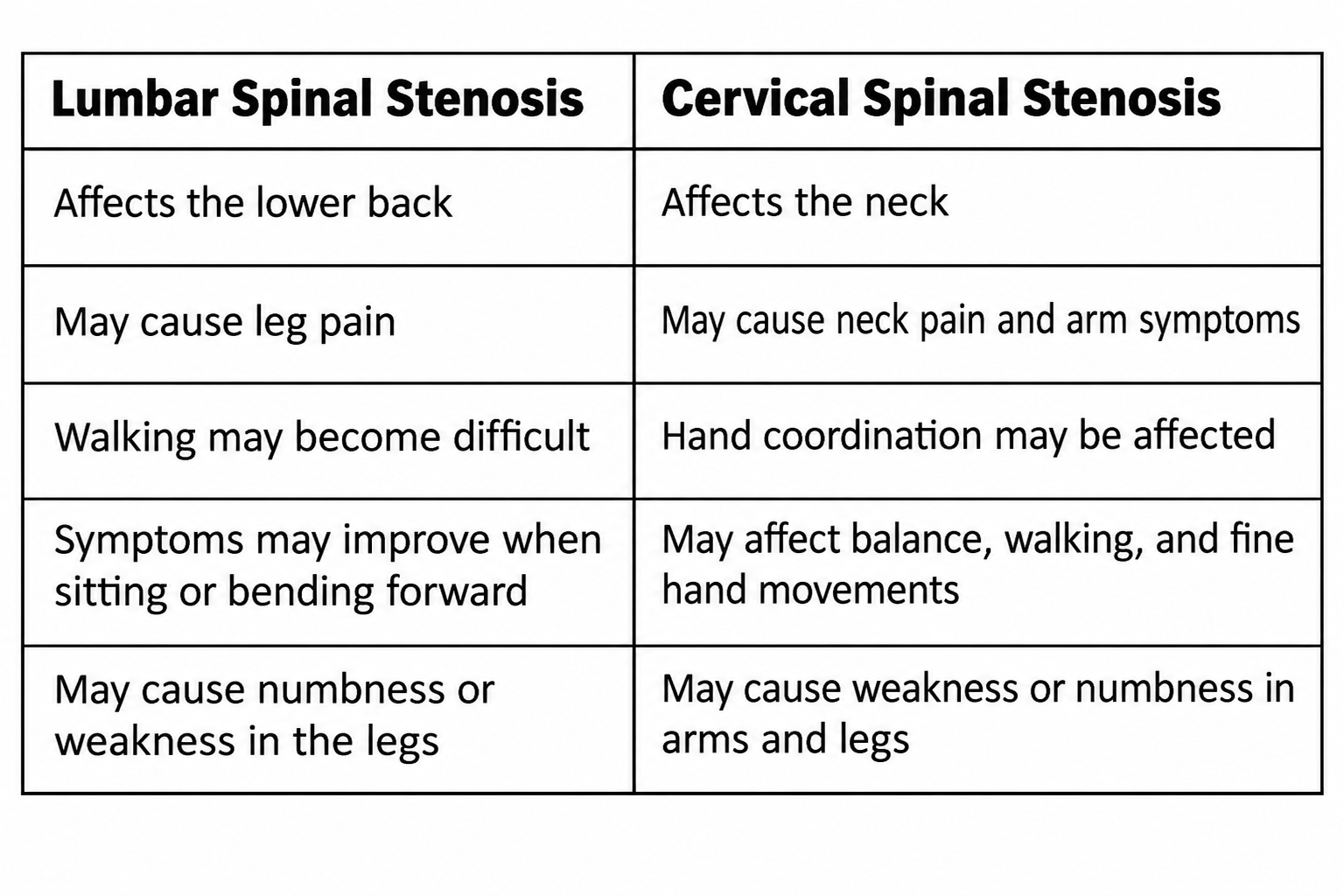
Some patients with lumbar stenosis notice that symptoms worsen when standing upright or walking and improve when sitting or leaning forward. This pattern is commonly associated with narrowing of the lower spinal canal.
What Causes Spinal Stenosis and Who Is at Risk?
Spinal stenosis often develops gradually due to changes in the spine over time. As discs, joints, bones, and ligaments change, the space available for the spinal cord and nerves may become reduced.
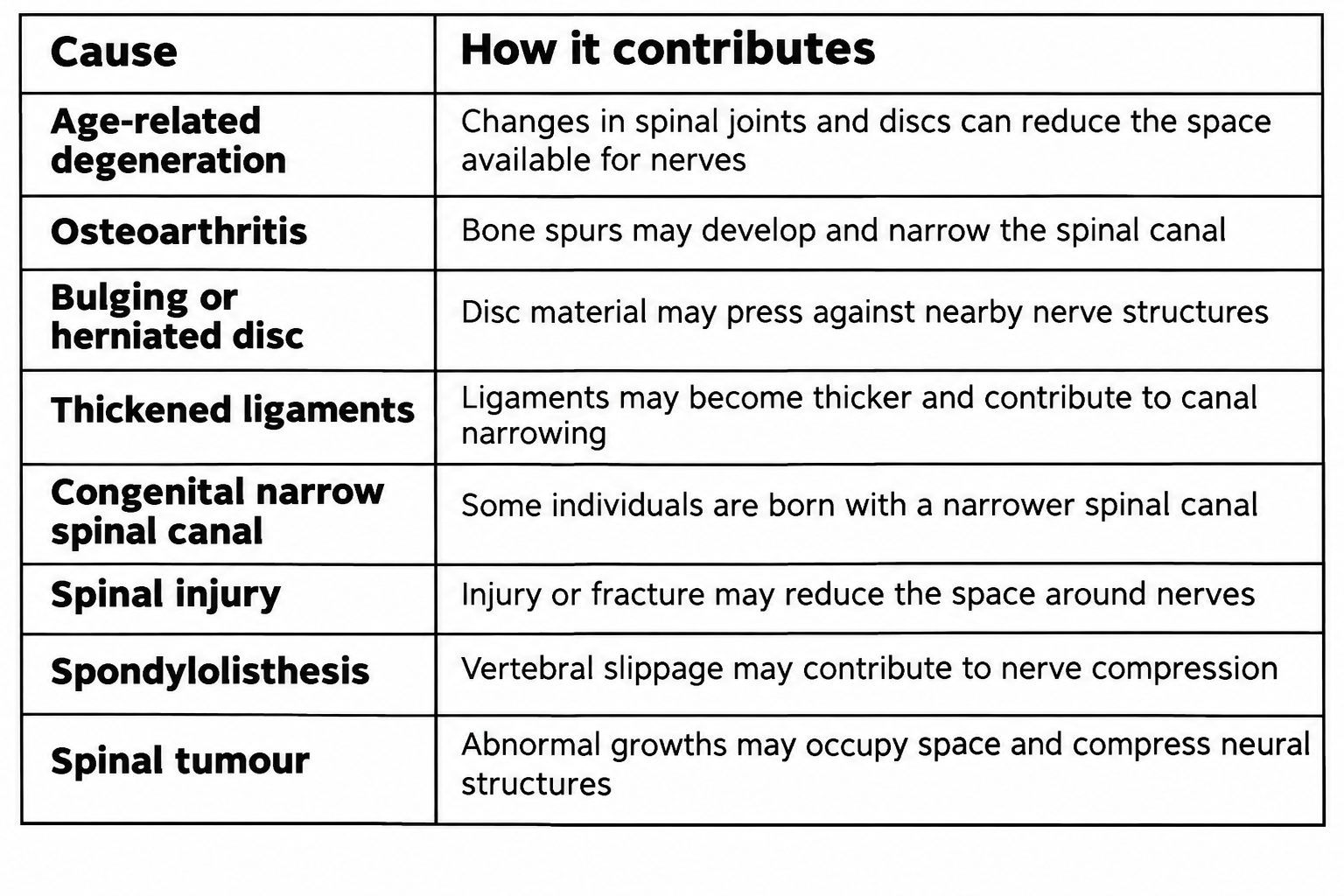
Risk factors for spinal stenosis
Certain factors may increase the risk of developing spinal stenosis:
- Increasing age
- Osteoarthritis
- Previous spinal injuries
- Congenital narrowing of the spinal canal
- Previous spinal surgery
- Degenerative disc disease
- Repetitive stress on the spine
Spinal stenosis does not always cause symptoms. Some individuals may have narrowing visible on imaging but experience little or no discomfort. Treatment decisions should therefore be based on symptoms, physical examination, and imaging findings together—not only on the MRI report.
How Is Spinal Stenosis Diagnosed and Treated?
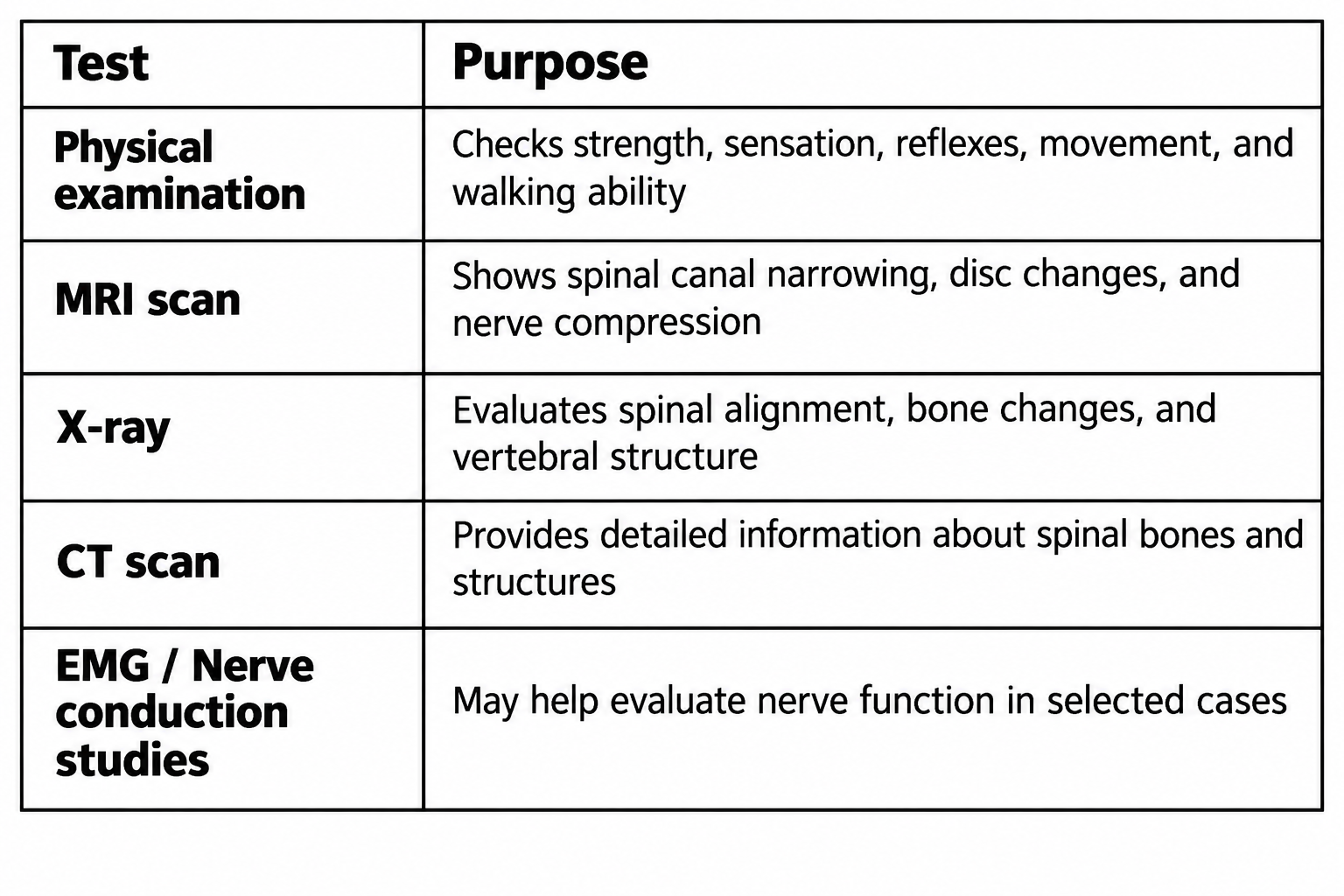
Diagnosis involves understanding the patient's symptoms, medical history, and physical examination findings. The doctor may assess walking, posture, muscle strength, reflexes, sensation, and the movements that increase or reduce symptoms.
Diagnostic tests for spinal stenosis
Treatment options for spinal stenosis
Treatment depends on the location of stenosis, severity of symptoms, neurological findings, and how much daily activity is affected.
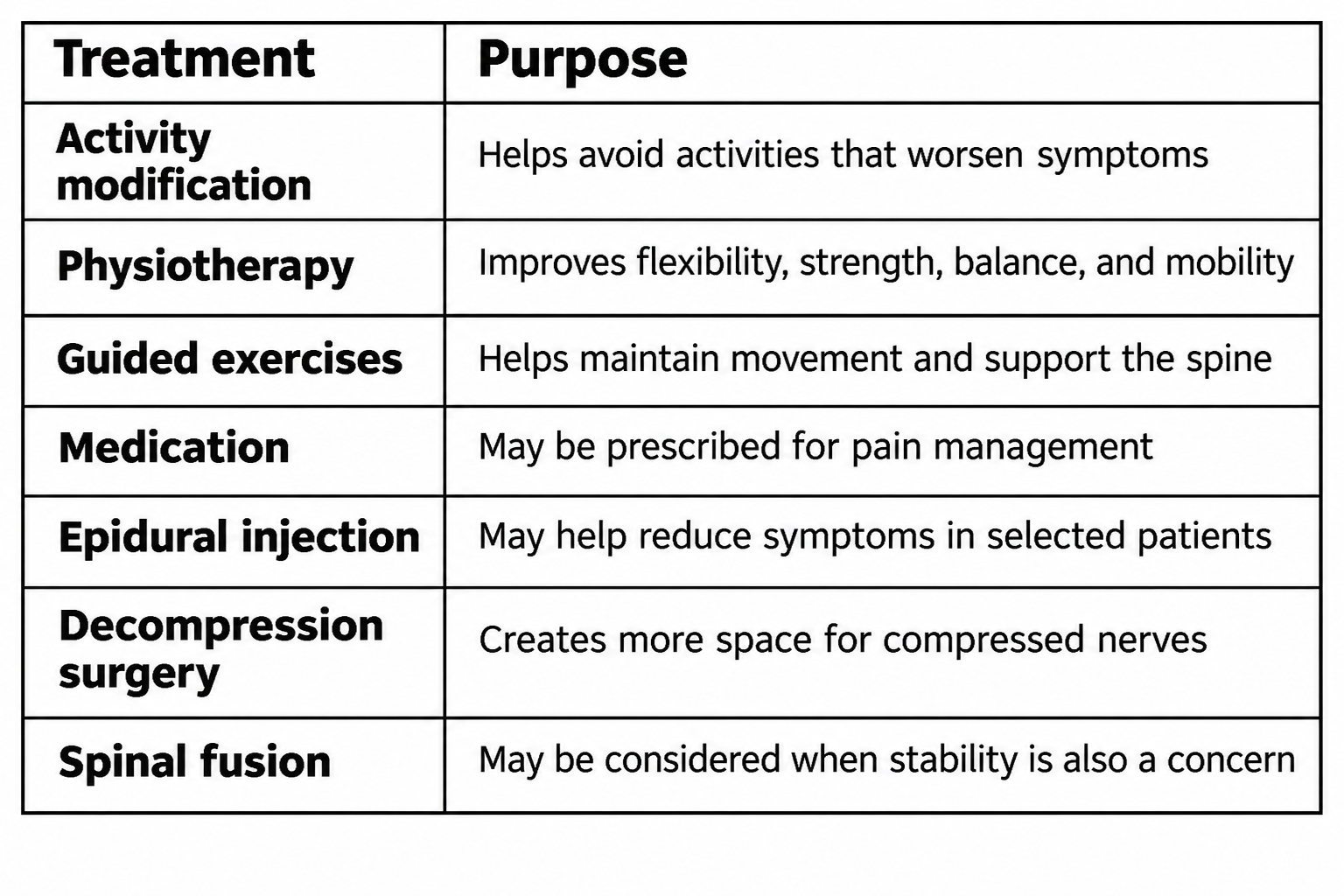
Many patients begin with non-surgical treatment. Surgery may be considered when symptoms remain disabling despite appropriate treatment, walking becomes significantly limited, or neurological weakness and other concerning symptoms develop.
Spinal Stenosis – Recovery, Prevention & Daily Care
Living with spinal stenosis can become challenging when pain, numbness, or weakness interferes with walking, standing, working, or sleeping. Appropriate treatment and lifestyle modifications may help patients maintain mobility and improve their quality of life.
Daily care tips for spinal stenosis
- Stay physically active: Avoid prolonged inactivity and follow an appropriate exercise plan.
- Avoid prolonged standing: Take regular breaks if standing increases your symptoms.
- Maintain a healthy weight: Reducing excess body weight can help decrease stress on the spine.
- Improve posture: Maintain comfortable spinal alignment while sitting, standing, and working.
- Use proper lifting techniques: Avoid sudden twisting and heavy lifting that aggravates symptoms.
- Follow physiotherapy: Perform exercises recommended for your condition and level of mobility.
- Do not ignore weakness: New or increasing muscle weakness should be medically assessed.
When should you seek urgent medical attention?
Seek immediate medical evaluation if spinal stenosis is accompanied by:
- New or rapidly worsening weakness in the arms or legs
- Difficulty walking or sudden loss of balance
- Loss of bladder or bowel control
- Difficulty passing urine
- Numbness around the groin or inner thighs
- Sudden worsening of neurological symptoms
These symptoms may indicate serious compression of the spinal cord or nerves and should not be ignored.
Spinal Stenosis Treatment at Global Neuro & Spine Care
Spinal stenosis may affect the lower back or neck and can lead to pain, numbness, weakness, and difficulty walking. Identifying the location and severity of nerve compression is important for deciding the appropriate treatment.
At Global Neuro & Spine Care, patients can seek guidance regarding spinal stenosis, disc-related conditions, spinal nerve compression, and other neurological and spine-related problems.
A specialist evaluation may help determine whether the condition can be managed through conservative treatment or whether surgical intervention should be considered.
Learn more: Neurosurgeon Consultation
Conclusion
Spinal stenosis is the narrowing of spaces within the spine that may compress the spinal cord or nerves. It can cause back or neck pain, numbness, tingling, weakness, and difficulty walking. Although many patients can initially be managed without surgery, worsening symptoms or neurological changes require timely medical evaluation. Early diagnosis and a personalized treatment plan can help improve mobility, reduce discomfort, and support better spinal health.
Frequently Asked Questions (FAQs)
1. Is spinal stenosis a serious condition?
Spinal stenosis can range from mild narrowing without symptoms to significant compression of nerves or the spinal cord. Severe cases may cause weakness, balance problems, difficulty walking, or bladder and bowel problems. The seriousness depends on the location, degree of narrowing, and symptoms.
2. Can spinal stenosis be cured without surgery?
Many patients can manage spinal stenosis without surgery through physiotherapy, activity modification, exercise, and appropriate medical treatment. However, these treatments may help control symptoms rather than reverse the structural narrowing. Surgery may be considered when symptoms are severe or neurological problems develop.
3. Why does spinal stenosis cause difficulty walking?
Spinal stenosis may compress the nerves responsible for movement and sensation in the legs. In lumbar spinal stenosis, patients may experience pain, heaviness, numbness, or weakness while standing or walking. Symptoms may improve when sitting or leaning forward, allowing some patients to walk more comfortably.
4. Is spinal stenosis common in older people?
Yes. Spinal stenosis is more common with increasing age because the discs, joints, and ligaments of the spine may undergo degenerative changes. Bone spurs, thickened ligaments, and disc bulging may reduce the space available for spinal nerves.
5. When does spinal stenosis require surgery?
Surgery may be considered when persistent pain significantly affects daily activities, walking becomes severely limited, conservative treatment does not provide adequate relief, or neurological weakness develops. The decision depends on clinical examination, imaging, overall health, and the specific spinal condition.