
Overview
Sciatica is a type of nerve pain that usually begins in the lower back and travels through the buttock and down one leg. It occurs when the sciatic nerve or the nerve roots that form it become irritated or compressed. The pain may feel sharp, burning, electric, or like pins and needles. Some people experience numbness or weakness in their leg or foot. Sciatica can interfere with walking, sitting, sleeping, and everyday activities. Understanding its causes, symptoms, and treatment options can help patients seek timely medical care and avoid complications.
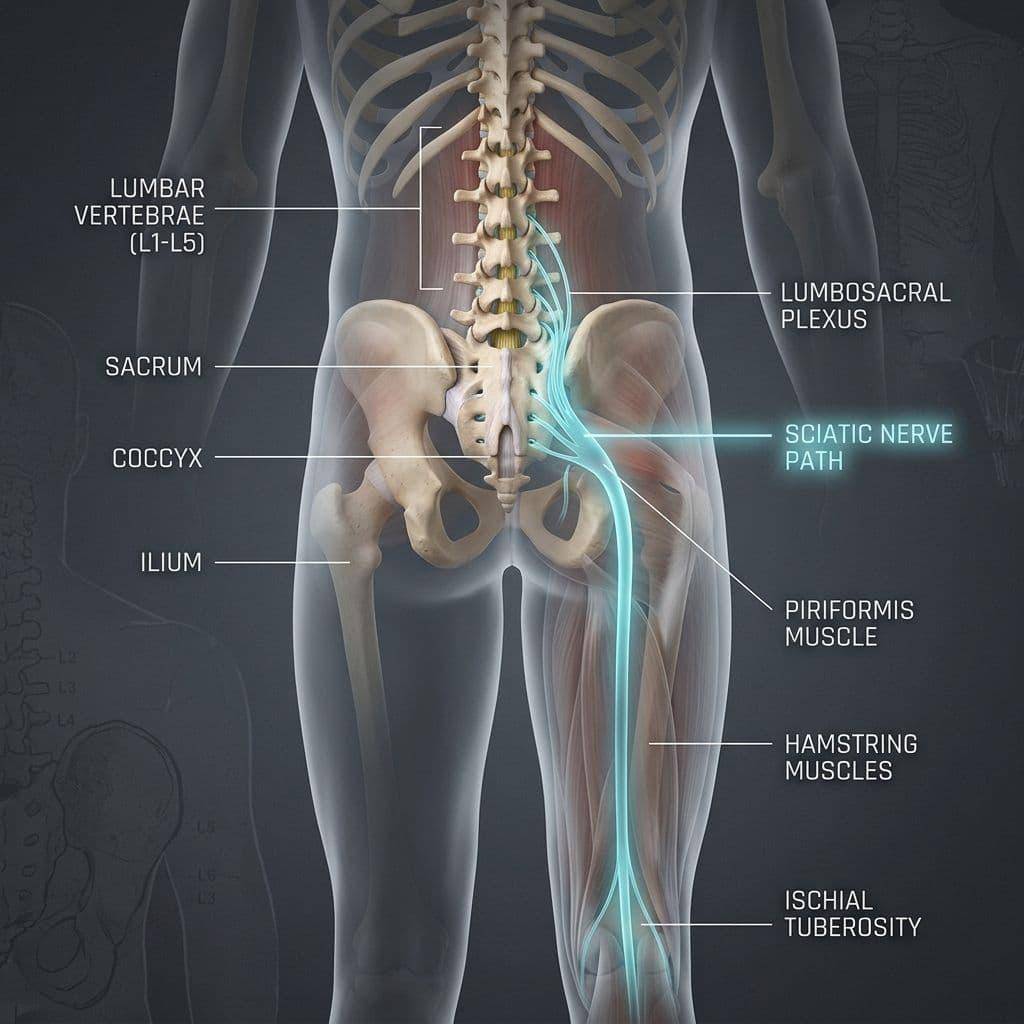
What Is Sciatica and What Are Its Symptoms?
Sciatica refers to pain caused by irritation or compression of the sciatic nerve or the nerve roots connected to it. The sciatic nerve is the largest nerve in the human body. It begins in the lower back, passes through the buttock, and travels down the back of the leg.
Sciatica usually affects one side of the body, although symptoms may vary depending on the location and severity of nerve irritation.
Common symptoms of sciatica
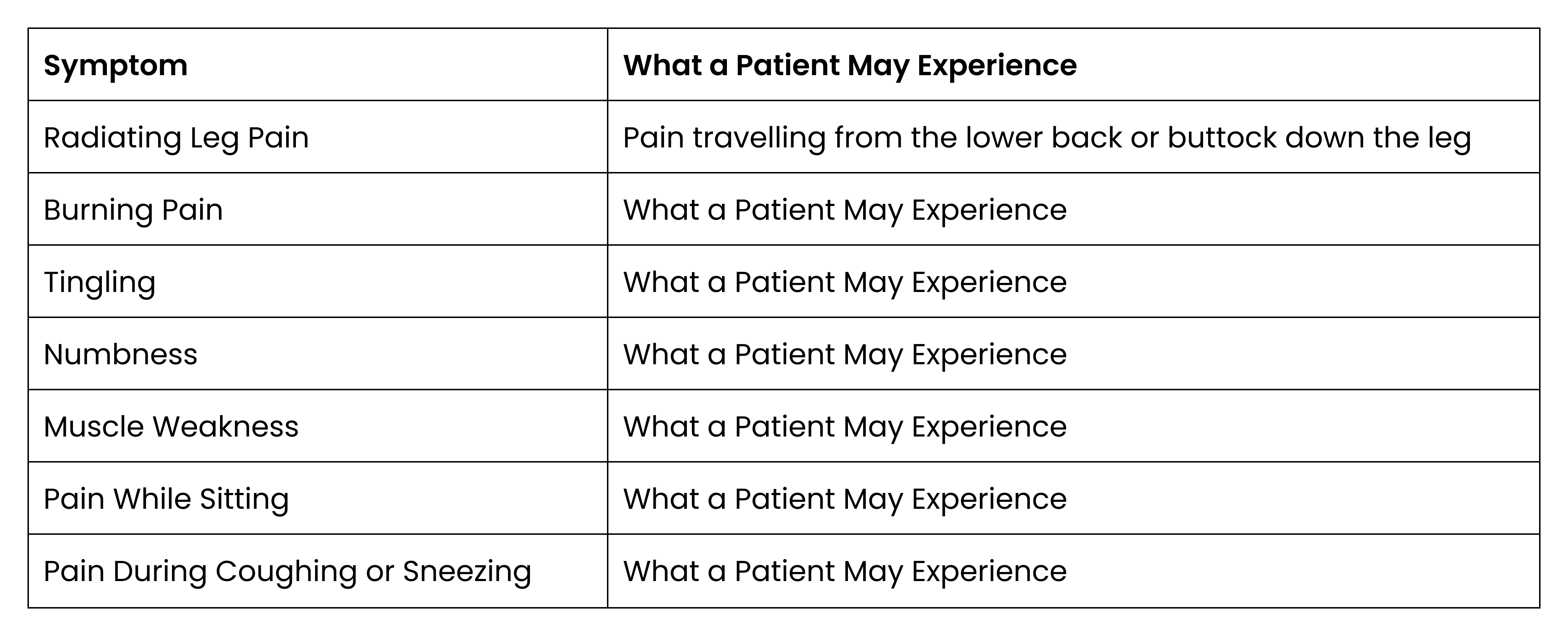
Sciatica pain may range from mild discomfort to severe pain that makes walking or standing difficult. In some patients, back pain may be mild while leg pain is the main complaint.
What Causes Sciatica and Who Is at Risk?
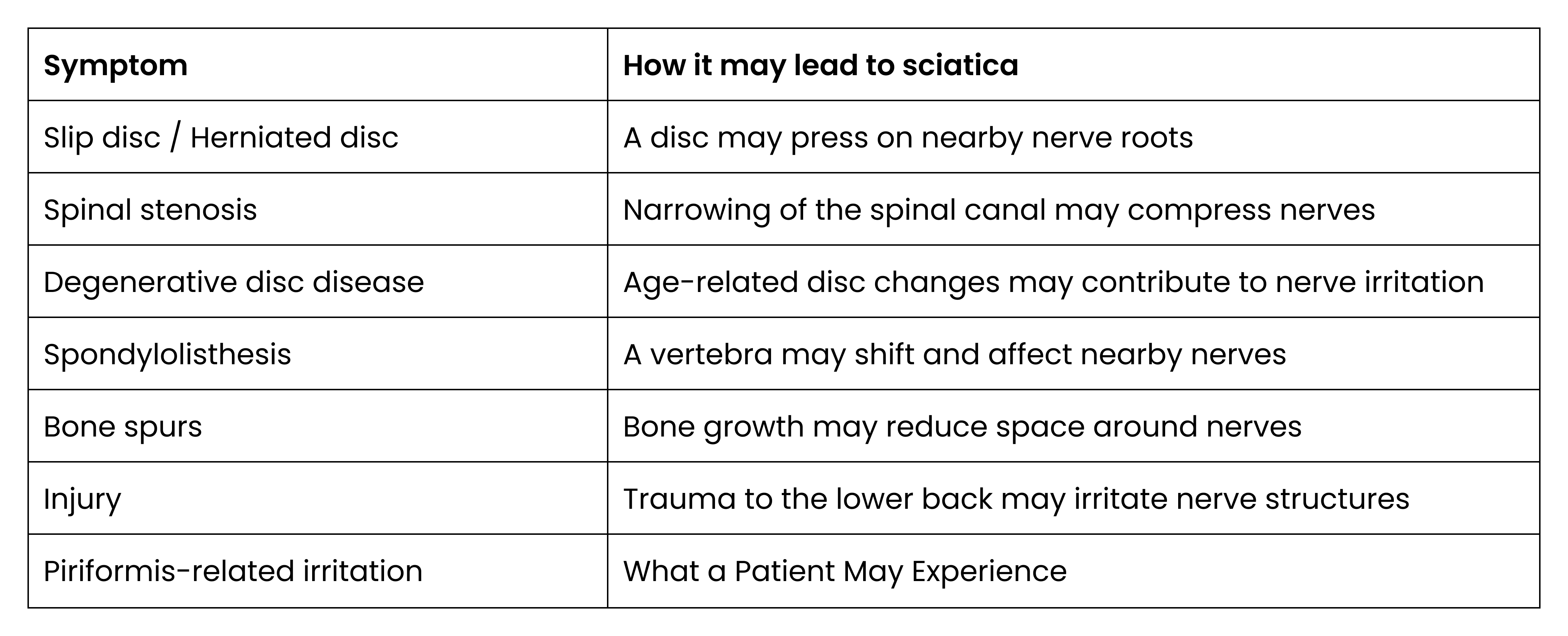
Sciatica occurs when the sciatic nerve or its nerve roots become compressed, irritated, or inflamed. Several spinal conditions can cause this problem, particularly those affecting the lower back.
Common causes of sciatica
Certain factors may increase the risk of developing sciatica :
- Age-related changes in the spine
- Prolonged sitting and inactivity
- Heavy lifting with poor technique
- Repetitive bending or twisting
- Excess body weight
- Weak core and back muscles
- Previous lower-back injuries
- Poor posture during work or daily activities
Not everyone with these risk factors develops sciatica. The actual cause needs to be evaluated based on symptoms, examination, and sometimes imaging.
How Is Sciatica Diagnosed and Treated?
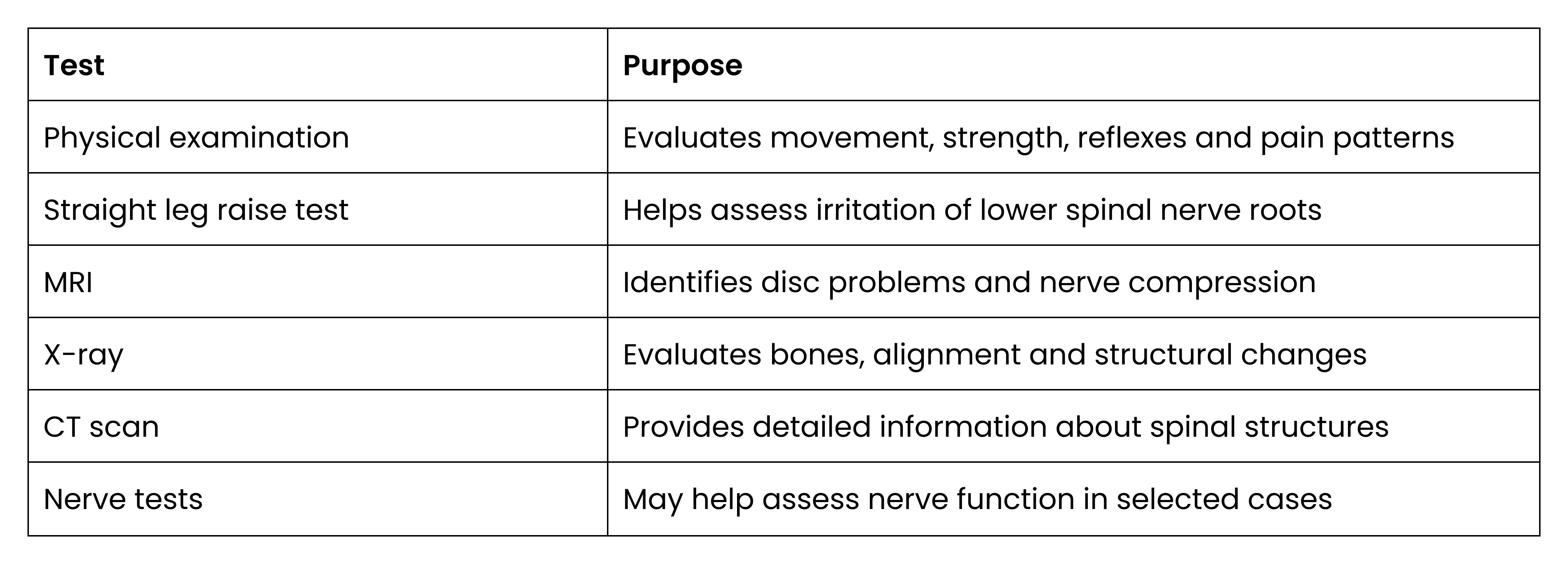
Diagnosis usually begins with a medical history and physical examination. The doctor may assess pain distribution, muscle strength, sensation, reflexes, walking ability, and movements that reproduce the symptoms.
Diagnostic Tests
Treatment options for sciatica
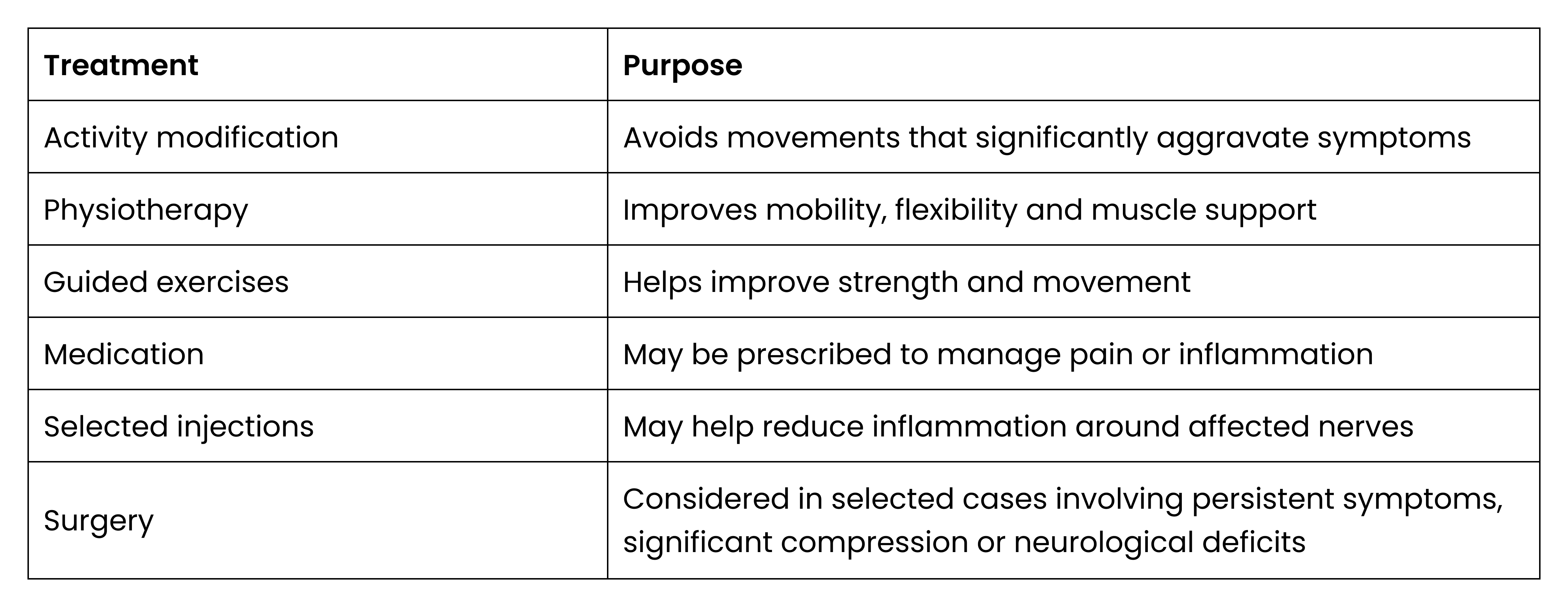
Treatment should be individualized. Surgery is not required for every patient with sciatica, but a specialist evaluation is important when pain persists, weakness develops, or symptoms significantly affect daily life.
Sciatica – Recovery, Prevention & Daily Care
Many people with sciatica improve with appropriate treatment and gradual return to normal activities. However, recovery depends on the underlying cause, severity of nerve irritation, and overall health.
Tips to manage sciatica in daily life
- Avoid prolonged sitting: Change positions regularly and take short movement breaks.
- Stay gently active: Avoid prolonged bed rest unless advised by your doctor.
- Maintain proper posture: Support your lower back while sitting and working.
- Lift correctly: Bend your knees and keep heavy objects close to your body.
- Follow physiotherapy: Perform only exercises recommended for your condition.
- Avoid sudden movements: Be cautious with heavy lifting, twisting, or activities that increase leg pain.
- Maintain a healthy weight: This can help reduce stress on the lower back.
When should you seek urgent medical attention?
Seek immediate medical evaluation if you experience:
- Sudden or worsening weakness in your leg
- Difficulty lifting the front of your foot
- Loss of bladder or bowel control
- Difficulty passing urine
- Numbness around the inner thighs, buttocks, or genital area
- Severe or rapidly worsening symptoms affecting both legs
These symptoms may indicate serious nerve compression and require urgent assessment
Sciatica Treatment at Global Neuro & Spine Care
Sciatica can be caused by different spinal conditions, and identifying the underlying cause is important for selecting the right treatment. Persistent leg pain, numbness, tingling, or weakness should not be ignored.
At Global Neuro & Spine Care, patients can seek guidance regarding neurological and spinal conditions, including disc-related nerve compression and other causes of sciatica.
A specialist evaluation may help determine whether the condition can be managed with medication, physiotherapy, injections, or whether a surgical opinion is required.
Early evaluation can help identify the cause of nerve pain and guide appropriate treatment.
Learn more: Neurosurgeon Consultation
Conclusion
Sciatica is a condition that causes pain travelling from the lower back or buttock down the leg due to irritation or compression of nerves. Although many cases improve with appropriate conservative treatment, persistent pain, numbness, or weakness requires medical evaluation. Understanding the symptoms, maintaining healthy movement habits, and seeking timely specialist care can help patients manage sciatica and protect their spinal and nerve health.
Frequently Asked Questions (FAQs)
1. What is the main cause of sciatica?
Sciatica commonly occurs when a nerve root in the lower spine is compressed or irritated. A herniated disc is one of the frequent causes. Other conditions, including spinal stenosis, degenerative changes, or bone spurs, may also contribute to sciatic nerve pain.
2. Can sciatica go away on its own?
Many cases of sciatica improve over time with appropriate activity modification, physiotherapy, and medical management. However, recovery varies depending on the cause. Persistent symptoms or worsening pain should be evaluated by a doctor to rule out significant nerve compression.
3. Is walking good for sciatica?
Gentle walking may help some people with sciatica by maintaining movement and preventing stiffness. However, the amount of walking should depend on pain and individual tolerance. If walking increases leg pain, numbness, or weakness significantly, medical advice should be sought.
4. Does sciatica require surgery?
No. Most patients do not require surgery. Non-surgical treatment is usually considered first. Surgery may be recommended when severe nerve compression causes significant weakness, symptoms persist despite appropriate treatment, or a specific spinal condition requires surgical correction.
5. When is sciatica dangerous?
Sciatica needs urgent medical attention if it is accompanied by new or worsening leg weakness, loss of bladder or bowel control, difficulty urinating, or numbness around the groin or saddle region. These may be signs of serious nerve compression and should not be ignored.