
Overview
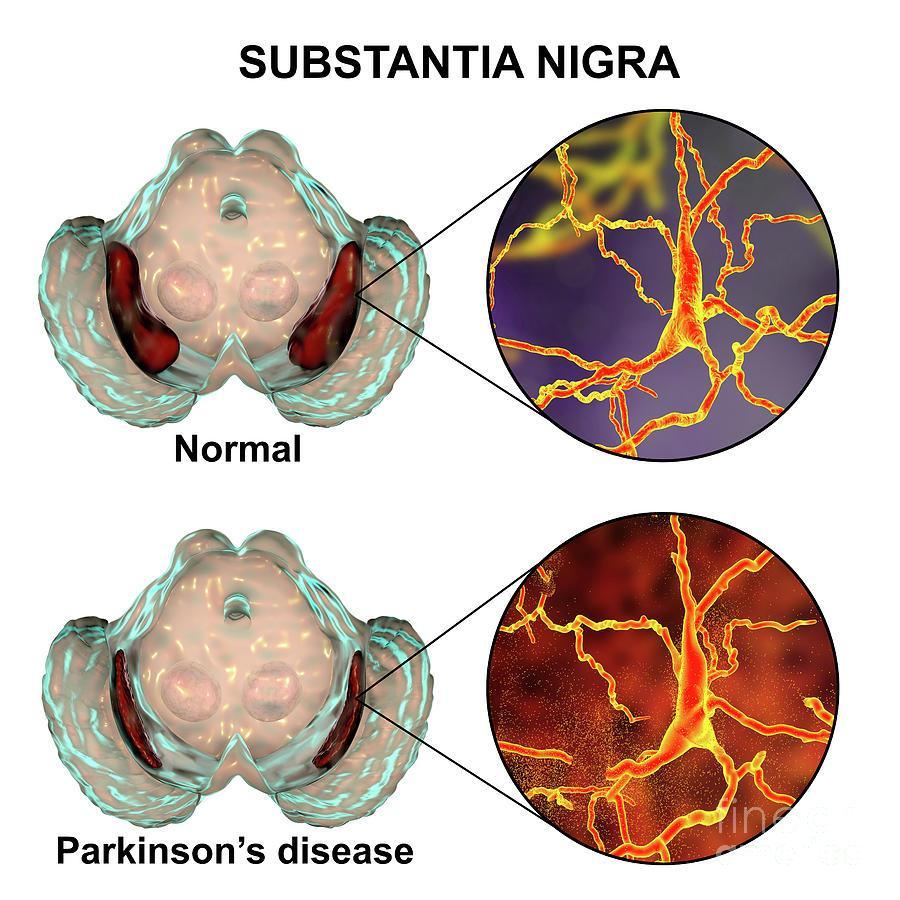
Parkinson's disease is a progressive neurological condition that affects movement, balance, and coordination. It develops when certain nerve cells in the brain, particularly those responsible for producing dopamine, become damaged or die. Dopamine plays an important role in controlling smooth and coordinated body movements. As dopamine levels decrease, people may develop tremors, muscle stiffness, slow movement, and balance problems. Parkinson's disease can also affect sleep, mood, speech, digestion, and other everyday functions. Although the condition progresses over time, appropriate treatment, exercise, and supportive care can help patients manage symptoms and maintain quality of life.
What Is Parkinson's Disease and What Are Its Symptoms?
Parkinson's disease is a neurological disorder that primarily affects the part of the brain involved in controlling movement. It is associated with the loss of dopamine-producing nerve cells in a brain region called the substantia nigra.
Dopamine helps the brain coordinate movements smoothly. When dopamine-producing cells become damaged, movements may become slower, muscles may become stiff, and balance may be affected.
Common symptoms of Parkinson's disease
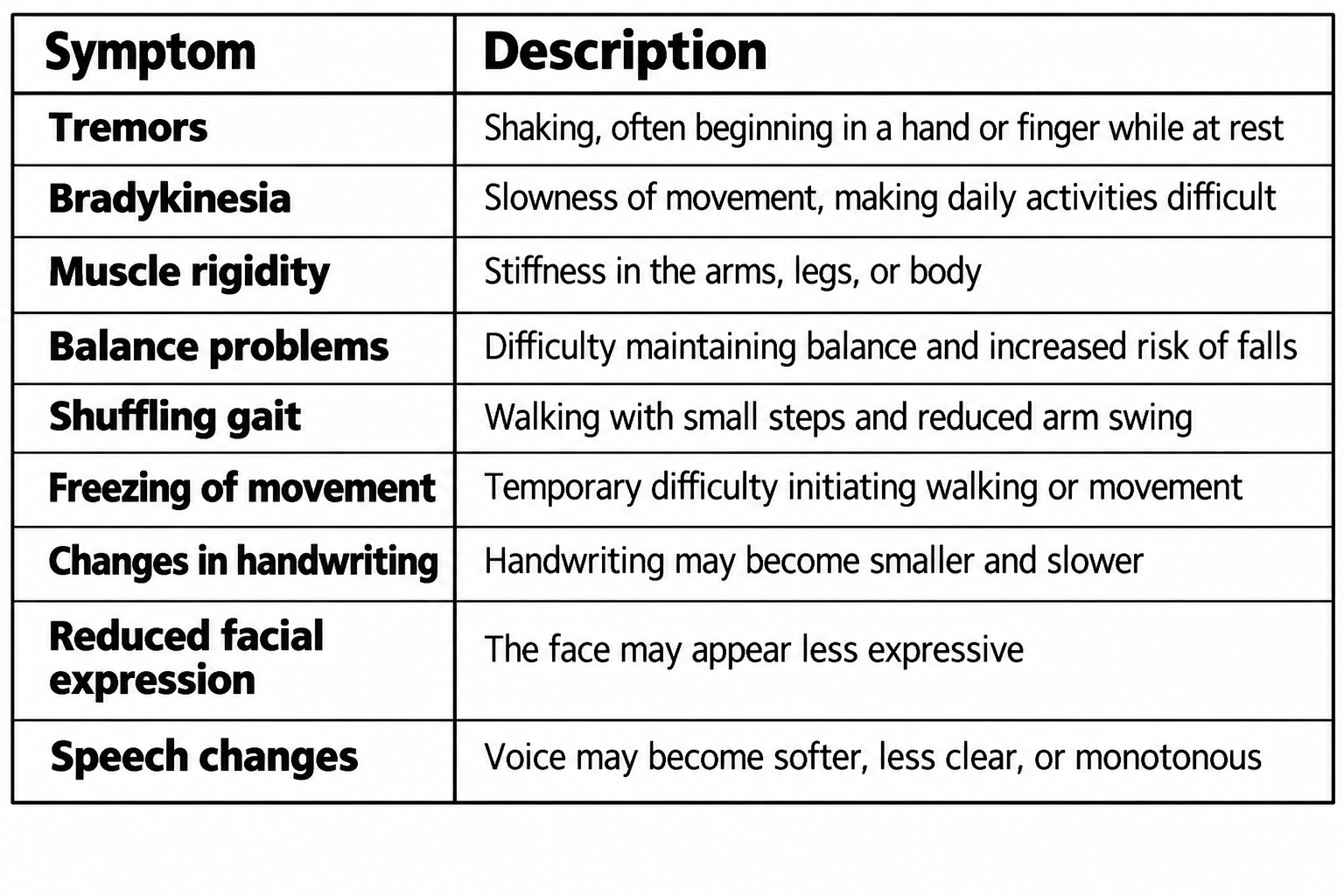
Non-motor symptoms
Parkinson's disease does not affect movement alone. Some patients may experience symptoms such as:
- Constipation
- Sleep disturbances
- Anxiety or depression
- Fatigue
- Reduced sense of smell
- Urinary problems
- Dizziness when standing
- Difficulty concentrating or memory changes in some patients
Symptoms often begin gradually and may initially affect one side of the body more than the other.
What Causes Parkinson's Disease and Who Is at Risk?
Parkinson's disease occurs when nerve cells responsible for producing dopamine in the brain become damaged or die. Dopamine is essential for controlling smooth and coordinated movement. Although the exact cause is not fully understood, researchers believe that a combination of genetic and environmental factors may contribute to its development.
Possible causes and contributing factors
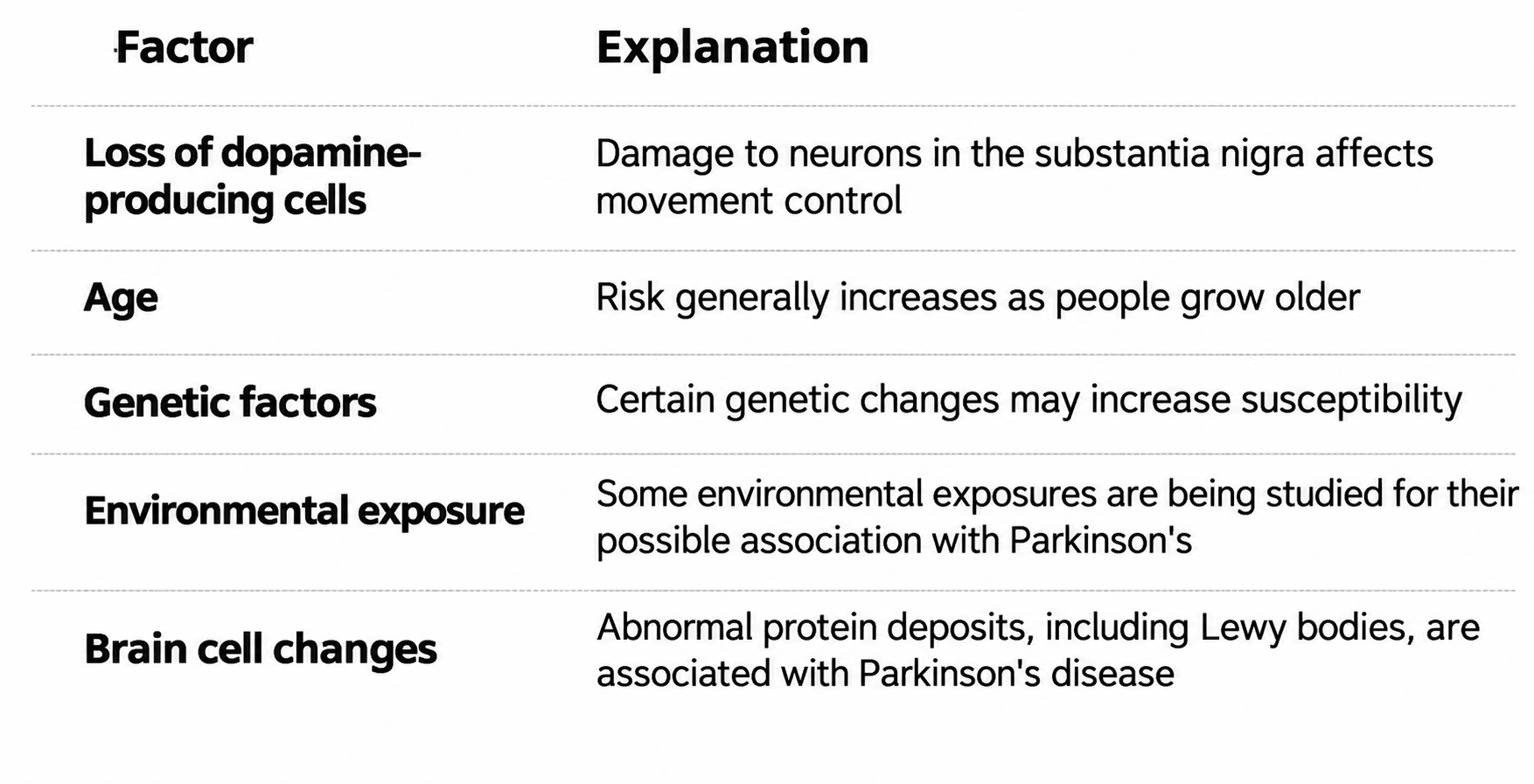
Risk factors for Parkinson's disease
Certain factors may increase the likelihood of developing Parkinson's disease:
- Increasing age
- Family history of Parkinson's disease
- Certain genetic variations
- Some environmental exposures
- Being male, as Parkinson's disease is more frequently diagnosed in men
However, having a risk factor does not mean a person will necessarily develop Parkinson's disease. Many people diagnosed with the condition have no clear family history or identifiable cause.
How Is Parkinson's Disease Diagnosed and Treated?
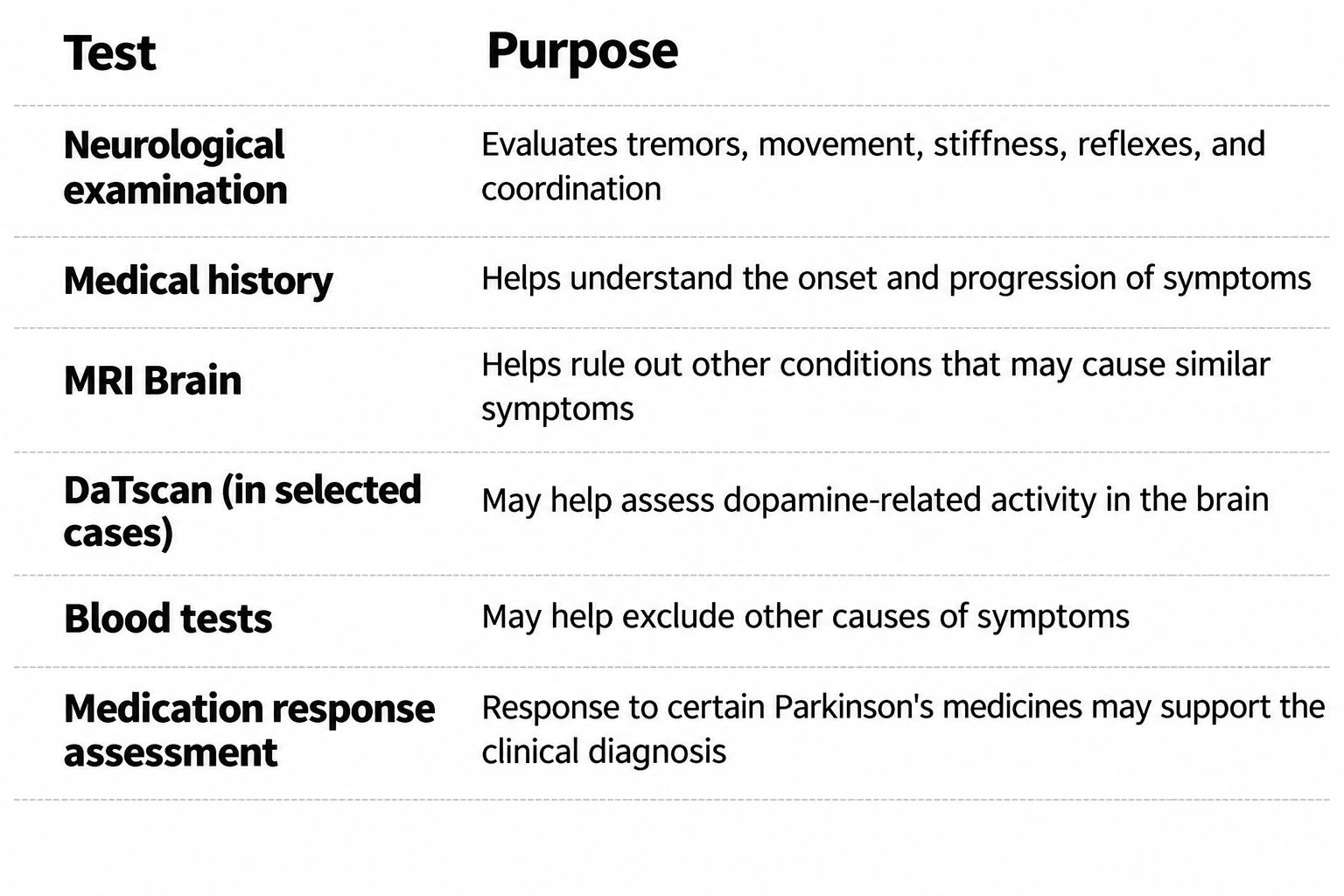
Parkinson's disease is primarily diagnosed through a clinical neurological evaluation. There is currently no single routine test that definitively confirms Parkinson's disease in every patient.
A neurologist evaluates movement, muscle stiffness, tremors, walking patterns, balance, medical history, and how symptoms have developed over time.
Diagnostic tests for Parkinson's disease
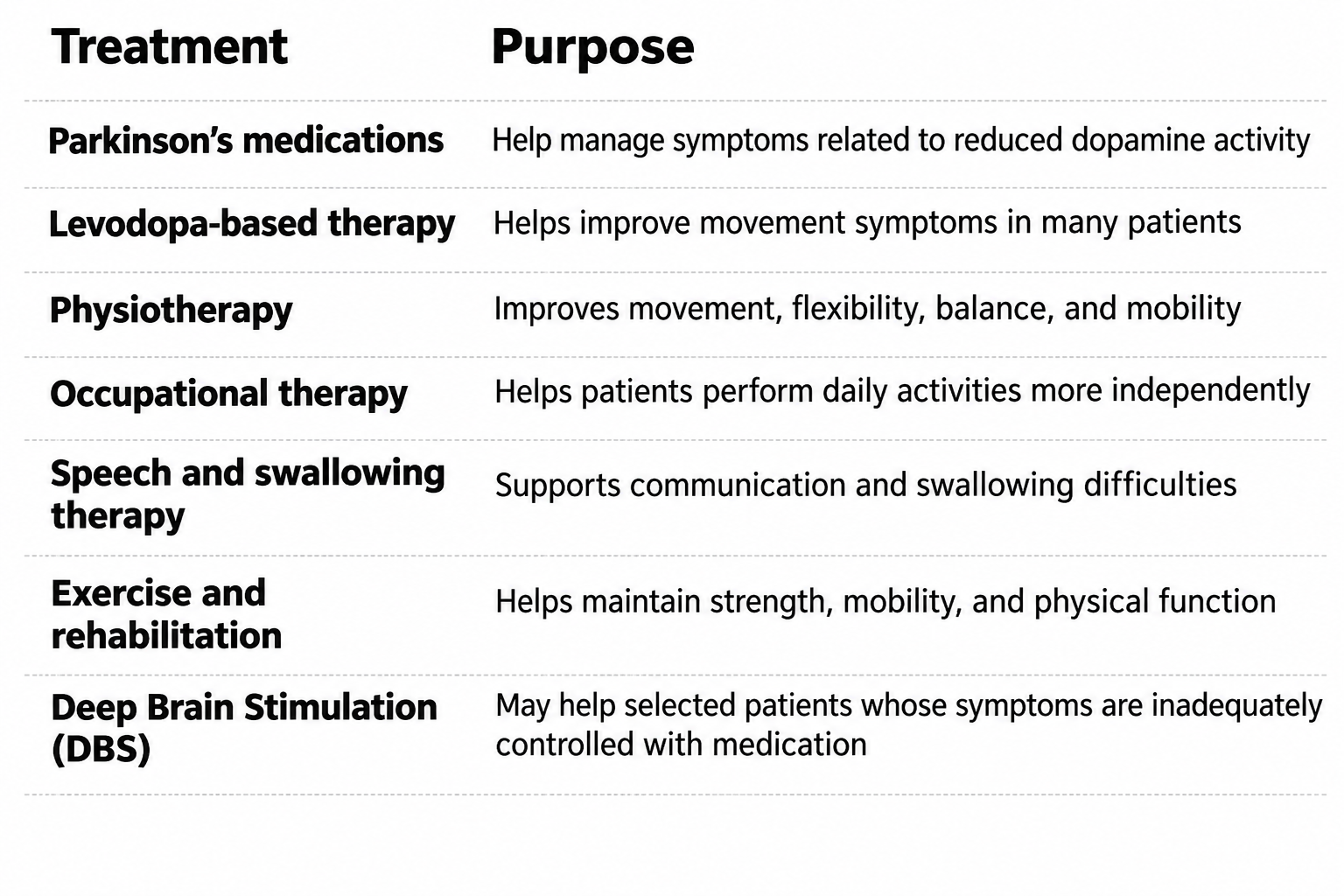
Treatment options for Parkinson's disease
Treatment focuses on improving movement, managing non-motor symptoms, maintaining independence, and supporting quality of life.
Parkinson's Disease – Recovery, Prevention & Daily Care
Parkinson's disease is a progressive condition, but regular treatment, physical activity, and supportive care can help patients maintain independence for longer. Daily routines and rehabilitation are important parts of managing symptoms and improving quality of life.
Daily care tips for people with Parkinson's disease
- Stay physically active: Walking, balance exercises, and supervised strength training may help maintain mobility.
- Follow medication schedules: Take prescribed medicines at the recommended time.
- Maintain a balanced diet: Eat nutritious meals and maintain adequate fluid intake.
- Prevent falls: Remove loose rugs, improve lighting, and use support when needed.
- Practice movement exercises: Physiotherapy may help improve walking, posture, flexibility, and balance.
- Support communication: Speech therapy may help with softer speech and communication difficulties.
- Maintain good sleep habits: Follow a regular sleep schedule and discuss sleep problems with your doctor.
- Seek emotional support: Family support, counselling, and patient support groups may help patients and caregivers cope.
When should you seek medical attention?
Consult a doctor if you notice:
- Persistent hand tremors
- Increasing stiffness or slowness of movement
- Difficulty walking or frequent falls
- Sudden changes in handwriting
- Increasing difficulty with daily activities
- Speech or swallowing difficulties
- Dizziness or fainting episodes
Sudden weakness on one side of the body, sudden facial drooping, or sudden difficulty speaking is not typical of gradual Parkinson's progression and may indicate a stroke. Seek emergency medical care immediately.
Parkinson's Disease Care at Global Neuro & Spine Care
Parkinson's disease requires long-term care that focuses on movement, neurological health, daily functioning, and quality of life. Recognizing early symptoms and obtaining an appropriate neurological assessment can help patients begin treatment and supportive care at the right time.
At Global Neuro & Spine Care, patients can seek guidance regarding Parkinson's disease, movement disorders, neurological symptoms, and other brain-related conditions.
A specialist evaluation can help patients understand their symptoms and explore appropriate medical management, rehabilitation, and supportive treatment options.
Conclusion
Parkinson's disease is a progressive neurological condition caused by changes in brain cells involved in movement control. It may cause tremors, stiffness, slow movement, balance problems, and several non-motor symptoms. Although the disease cannot currently be completely cured, medications, physiotherapy, exercise, rehabilitation, and selected advanced treatments can help manage symptoms. Early diagnosis and regular medical follow-up are important for maintaining independence and improving quality of life.
Frequently Asked Questions (FAQs)
1. What are the early signs of Parkinson's disease?
Early signs may include tremors in one hand, stiffness, slower movement, reduced arm swing while walking, smaller handwriting, reduced facial expression, and changes in balance. Some patients may also experience constipation, sleep problems, or loss of smell before noticeable movement symptoms begin.
2. Is Parkinson's disease curable?
Currently, Parkinson's disease has no definitive cure. However, several treatments can help manage symptoms, improve movement, and maintain quality of life. Medication, physiotherapy, exercise, and selected surgical or device-based treatments may help patients manage the condition effectively.
3. Does Parkinson's disease always cause hand tremors?
No. Although tremors are a common symptom, some people with Parkinson's disease do not experience noticeable shaking. Slowness of movement, muscle stiffness, balance problems, and walking difficulties may be the main symptoms in some patients.
4. At what age does Parkinson's disease usually occur?
Parkinson's disease most commonly develops in older adults, particularly after the age of 60. However, it can occur in younger individuals as well. When symptoms develop before the age of 50, it is often referred to as young-onset Parkinson's disease.
5. Can exercise help people with Parkinson's disease?
Yes. Regular, appropriately selected exercise can help improve mobility, flexibility, balance, muscle strength, and overall physical function. Activities should be adjusted according to the person's symptoms, fall risk, and physical ability. Physiotherapist-guided exercise may be especially beneficial.