
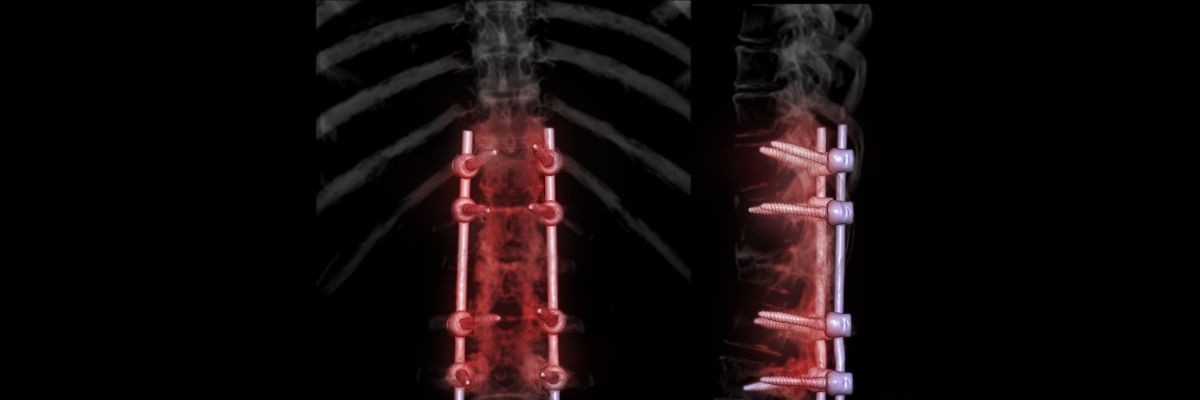
What is Lumbar Stabilization Surgery?
Lumbar stabilization is a surgery done on your lower back to help stabilize weak or unstable parts of your spine.
- Your surgeon uses rods, screws, and other tools to hold the bones in place
- It reduces excessive or abnormal movement between the bones in your lower back
- It helps reduce pain and prevents further damage to the nerves and spine
- Unlike fusion surgery that locks bones permanently, this allows some gentle movement
Why or When Is Lumbar Stabilization Suggested?
Your doctor may recommend this surgery when:
- You have damaged or bulging discs that press on nerves
- You’re suffering from spondylolisthesis (a slipped spine bone)
- You’ve tried medicines, therapy, or spinal injections, but nothing worked
- You have spinal stenosis (narrowing of the spinal canal)
- You have spinal instability (bones move too much or shift)
- You’re dealing with fractures, spinal arthritis, or nerve problems
- You have birth defects, scoliosis, or tumors affecting the lower spine
In simple terms: If your lower back pain is caused by a loose or unstable spine, and it's not getting better with other treatments, this surgery may help.
How is Lumbar Stabilization Done?
The surgery is usually done under general anesthesia (you’ll be asleep and won’t feel pain).
Here’s what happens:
- A small cut is made in the center of your lower back
- The surgeon places flexible rods and screws into your spine
- These rods support and stabilize the bones, helping them stay in place
- If needed, the doctor may also remove damaged discs or tissues
- The cut is closed carefully with stitches
Surgery Time: Around 2 to 3 hours, depending on how many levels of the spine are treated
Sometimes a fusion is added, where two bones are joined together using a bone graft
What Happens After Surgery?
Most patients recover quickly and start walking by the next day.
Here’s what you can expect:
- You’ll stay in the hospital for 1–2 days
- If a wound drain is placed, it will be removed within 24–48 hours
- No driving or heavy work for at least 2 weeks
- Take 4–6 weeks off work, depending on your job and how your body heals
- Your stitches will be removed after 2 weeks
- You’ll have a follow-up with your doctor to check healing
Recovery Tips – Do’s and Don’ts After Lumbar Stabilization
Do:
- Walk short distances daily as advised
- Rest well and eat healthy foods
- Use proper sitting posture
- Do light stretching and physical therapy (only as prescribed)
- Keep your follow-up appointments
Don’t:
- Lift heavy items or bend your back suddenly
- Sit for too long without taking a break
- Delay wound care or miss your check-ups
- Rush back to work or gym