
Coffee: Your Brain’s Morning Friend or Hidden Enemy?
For millions of Indians, coffee is more than a beverage—it’s the fuel that starts the day. Whether you’re preparing for an important meeting, studying for an exam, or finishing a night shift, that steaming cup often feels like a trusted companion.
But have you ever wondered:
- How does coffee work on the brain?
- Does coffee improve memory?
- Can coffee prevent Alzheimer’s disease?
- Is coffee good for concentration?
- How much coffee is actually healthy?
As neuro specialists, we hear these questions frequently. The good news is that science has studied coffee extensively, and the answers are fascinating.
What Happens Inside Your Brain After Drinking Coffee?
Within about 20–30 minutes, caffeine enters your bloodstream and reaches your brain.
Normally, your brain produces a chemical called adenosine. Throughout the day, adenosine accumulates and makes you feel sleepy.
Caffeine works by blocking adenosine receptors.
Imagine adenosine as a red traffic signal telling your brain to slow down.
Caffeine temporarily turns that signal green.
Once adenosine is blocked, your brain increases the activity of important neurotransmitters including:
- Dopamine (motivation and reward)
- Norepinephrine (alertness)
- Glutamate (learning and memory)
The result?
✔ Better alertness
✔ Improved concentration
✔ Faster reaction time
✔ Higher productivity
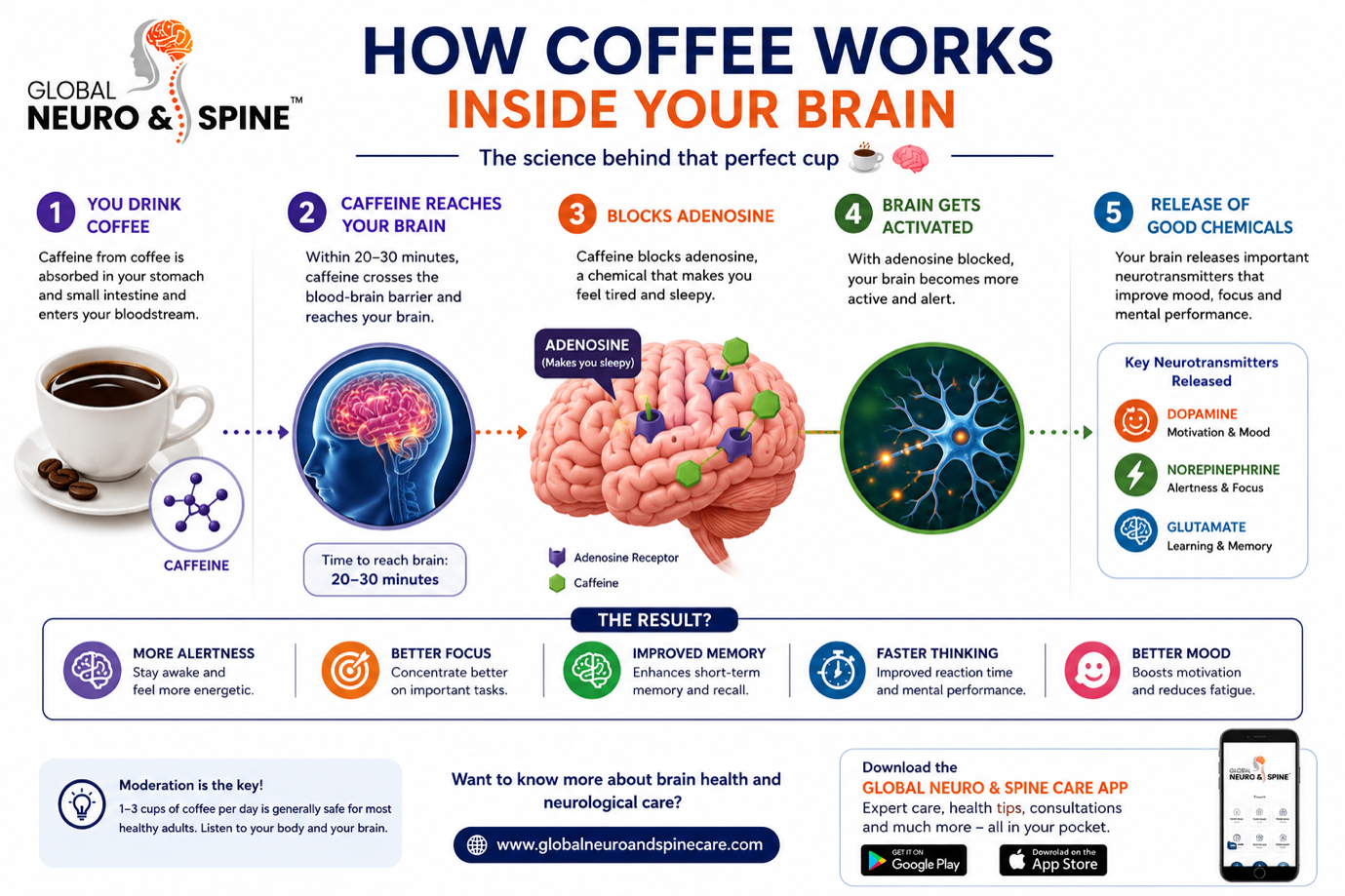
“How Coffee Works Inside Your Brain”
Coffee and Brain Performance : Scientific studies have consistently shown that moderate caffeine intake can improve several aspects of brain function.
Benefits include:
Improved Attention : Coffee helps maintain focus during repetitive work, long meetings and study sessions.
Better Reaction Time : Drivers, athletes and professionals often experience quicker responses after moderate caffeine intake.
Enhanced Short-Term Memory : Coffee may temporarily improve working memory, helping you retain information while learning.
Reduced Mental Fatigue Feeling mentally exhausted?
Coffee can temporarily reduce the sensation of fatigue, making demanding tasks feel easier.
Does Coffee Improve Mood?
Yes—at least temporarily.
Caffeine stimulates dopamine release.
Dopamine is often called the “feel-good neurotransmitter.”
That’s why many people feel happier, more energetic and motivated after their morning coffee.
However, depending on coffee alone for mood enhancement is not advisable. Long-term emotional health still depends on:
- Good sleep
- Regular exercise
- Healthy relationships
- Stress management
Can Coffee Protect Your Brain from Dementia?
This is one of the most searched questions on Google.
Research suggests that moderate coffee consumption may be associated with a lower risk of developing:
- Parkinson’s disease
- Alzheimer’s disease
- Cognitive decline
- Dementia
Coffee is also rich in antioxidants that may help reduce oxidative stress, one of the factors linked to ageing of brain cells.
It is important to remember that coffee cannot prevent or cure these conditions. A healthy lifestyle remains the cornerstone of brain health.
Coffee and Stroke Risk
Several large observational studies suggest that moderate coffee consumption may be associated with a lower risk of stroke in some populations.
The likely reasons include:
- Better blood vessel function
- Antioxidant effects
- Reduced inflammation
However, excessive caffeine consumption may temporarily increase blood pressure in some individuals. People with uncontrolled hypertension should discuss their caffeine intake with their doctor.
How Much Coffee Is Healthy?
1–3 cups per day is generally considered a reasonable amount.
The exact amount depends on:
- Body weight
- Age
- Liver metabolism
- Sleep quality
- Medications
- Existing medical conditions
More is not always better.

When Coffee Can Become Harmful
Too much caffeine may cause:
- Anxiety
- Restlessness
- Insomnia
- Fast heartbeat
- Tremors
- Headache
- Acid reflux
- Dependence
If coffee is disturbing your sleep, it may actually reduce your brain performance the following day.
Remember:
Sleep is still the best brain booster.
Who Should Limit Coffee?
Speak with your healthcare professional before consuming large amounts of caffeine if you have:
- Pregnancy
- Severe anxiety
- Heart rhythm disorders
- Uncontrolled high blood pressure
- Severe acid reflux
- Chronic insomnia
Children and adolescents should also avoid excessive caffeine intake.
Five Brain-Friendly Coffee Habits
Instead of drinking coffee all day:
✔ Drink it after breakfast instead of on an empty stomach.
✔ Avoid coffee within 6–8 hours of bedtime.
✔ Stay hydrated.
✔ Don’t replace sleep with caffeine.
✔ Combine coffee with regular exercise and a healthy diet.
The Neuro Expert’s Verdict
Coffee is not a miracle medicine—but it is also not the villain it is sometimes portrayed to be.
When consumed in moderation, coffee can:
- Improve focus
- Increase alertness
- Enhance productivity
- Support short-term memory
- Potentially contribute to long-term brain health
The healthiest brain is built through balanced nutrition, good sleep, regular physical activity, stress management, social engagement, and appropriate medical care. Coffee can complement those habits—it cannot replace them.
Frequently Asked Questions
Is coffee good for your brain?
Moderate coffee consumption can improve alertness, concentration and mental performance. Some studies also suggest a lower risk of Parkinson’s disease and Alzheimer’s disease, although coffee is not a treatment or preventive therapy.
Does coffee improve memory?
Coffee may temporarily improve working memory and attention, especially during mentally demanding tasks.
Is coffee good for studying?
Many people experience improved focus and reduced mental fatigue after moderate caffeine intake. However, adequate sleep remains essential for learning and memory.
How many cups of coffee are safe?
For most healthy adults, 1–3 cups daily is generally considered reasonable, though individual tolerance varies.
Can coffee cause headaches?
Yes. Excessive caffeine intake or sudden caffeine withdrawal can trigger headaches in some people.
Take Charge of Your Brain Health
Your brain is your body’s most valuable organ. Every daily choice—including what you drink—can influence how well it performs.
If you would like reliable, evidence-based information on brain health, stroke prevention, spine care, memory improvement, Parkinson’s disease, epilepsy, back pain, neck pain, headaches and neurological disorders, visit:
🌐 www.globalneuroandspinecare.com
Explore hundreds of expert resources designed to help you and your family make informed health decisions.
Download the Global Neuro & Spine Care App
With the app, you can:
- Connect with experienced neuro specialists
- Access trusted health information
- Receive regular brain and spine health tips
- Keep track of your neurological care
- Stay informed with expert guidance—right from your smartphone
Medical Disclaimer
This article is intended for educational purposes only and should not be considered a substitute for professional medical advice, diagnosis or treatment. Always consult a qualified healthcare professional regarding any medical concerns.