
Overview
Your pillow has one important job: to keep your head, neck and spine comfortably aligned while you sleep. It should not behave like a mountain, a pancake or a wrestling opponent!
A pillow that is too high pushes your head forward or sideways. A pillow that is too low allows your head to drop. Either position can place prolonged stress on the cervical spine and neck muscles, contributing to neck pain after waking up, morning stiffness, shoulder pain and disturbed sleep. Research also shows that pillow height influences cervical-spine alignment and the mechanical load placed on the neck.
What is the best pillow for neck pain?
The best pillow for neck pain is not automatically the softest, firmest or most expensive pillow. The correct choice depends on your sleeping position, shoulder width, body shape and mattress firmness.
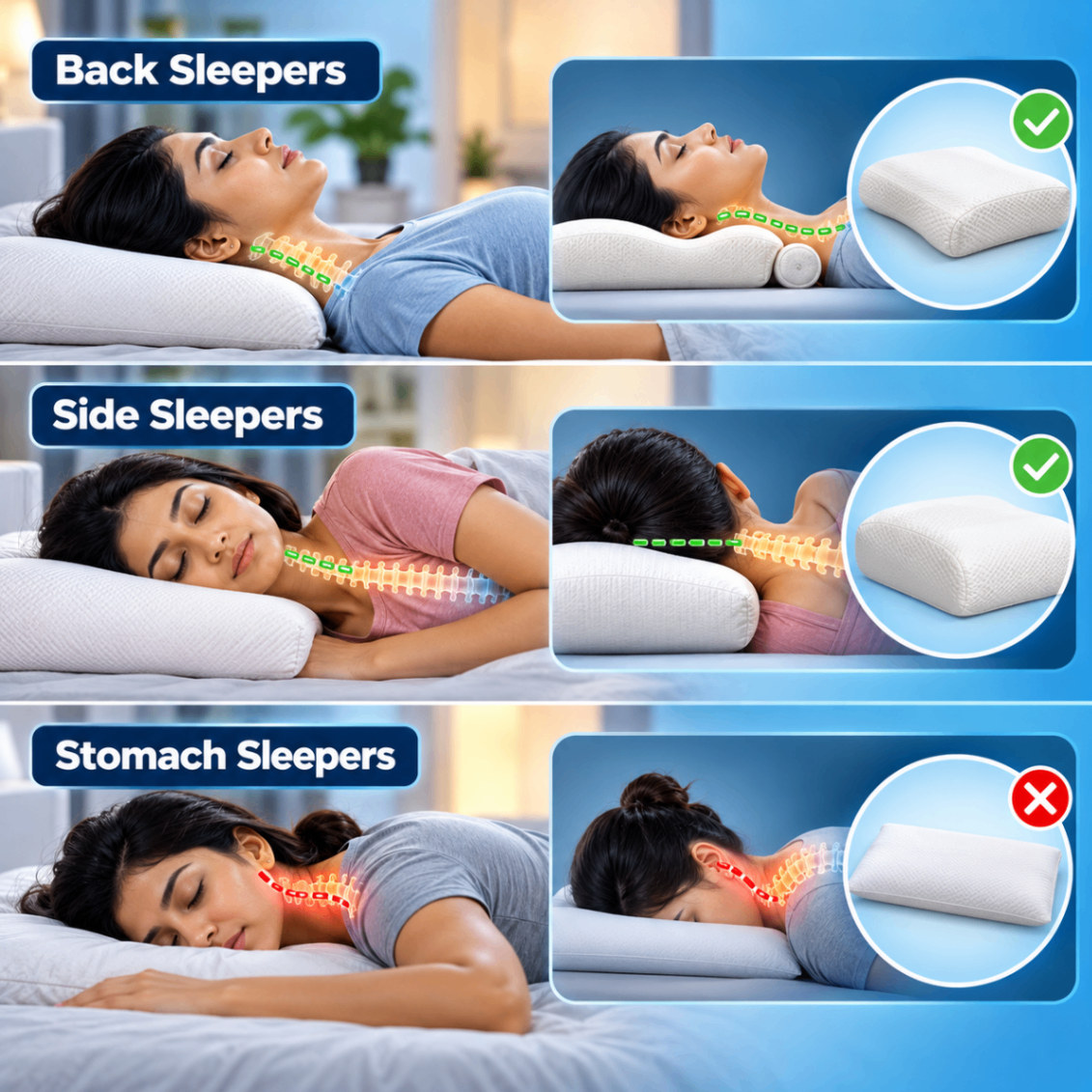
The aim is simple: maintain a neutral cervical spine position, with your head aligned with the rest of your body.
For many back sleepers, a low-to-medium pillow with gentle support beneath the natural curve of the neck works well. A small, soft neck roll or rolled towel placed inside the pillowcase may provide additional support without pushing the head too far forward. NHS guidance similarly recommends supporting the natural hollow of the neck and keeping the head at a neutral height.
Choose your pillow according to your sleeping position
Back sleepers : Use a relatively low pillow that supports both the head and the curve of the neck. Your face should point upward, and your chin should not be pushed toward your chest.
A small, soft roll—approximately the size of a water bottle—may be placed behind the neck for gentle support. It should support the neck rather than significantly lift the head.
Side sleepers : Your pillow should fill the space between your ear and shoulder. When viewed from behind, your head should remain level with the spine rather than tilting toward the mattress or ceiling.
Broad-shouldered individuals may need a slightly higher pillow, while people with narrower shoulders may need a lower one.
Stomach sleepers : Sleeping face-down keeps the neck rotated for several hours and may worsen cervical pain and neck stiffness. People searching for the best sleeping position for neck pain should generally try sleeping on their back or side first.
Can a cervical pillow cure cervical spondylosis?
A cervical pillow, contour pillow or neck support pillow may improve comfort and sleeping posture, but it cannot cure cervical spondylosis, a slipped disc or nerve compression.
Persistent neck pain requires proper clinical assessment. Depending on the cause, neck pain treatment may include posture correction, exercises, physiotherapy, medicines or specialist care. Evidence suggests that ergonomic pillows may help some people with cervical spondylosis, but pillow choice remains individual.
Try the two-minute pillow test tonight
Lie in your normal sleeping position and ask someone to observe your head and neck.
If your chin is pushed toward your chest, your pillow may be too high. If your head drops backward or tilts toward the mattress, your pillow may be too low. Ideally, your head, neck and upper spine should form a comfortable, neutral line.
Small pillow adjustments can sometimes make a surprisingly big difference—but severe or persistent pain should not be blamed on the pillow alone.
Seek medical attention for neck pain following an injury, or when pain is accompanied by fever, arm or leg weakness, numbness, tingling, balance problems or bladder and bowel changes.
Visit www.globalneuroandspinecare.com and download the Global Neuro and Spine Care App for more free brain, spine and neurological health guidance.