Keep Your Spine Straight: The Simplest Habit for a Healthy Back
Good posture is one of the simplest habits you can adopt to support a healthy spine. By sitting, standing, and moving correctly, you can reduce unnecessary strain on your back and neck, improve comfort during daily activities, and lower the risk of posture-related pain. Discover practical tips to protect your spine, understand common conditions like back pain, slip disc, and sciatica, and learn when it's time to seek expert medical advice.
The Simplest Spine-Health Advice: Keep It Straight
Back pain has become a common concern among office workers, drivers, students, homemakers and older adults across India. Many people search online for terms such as back pain treatment, lower back pain relief, neck pain treatment, slip disc, sciatica treatment and spine specialist near me.
One of the simplest things you can do to support your spine is to maintain good posture.
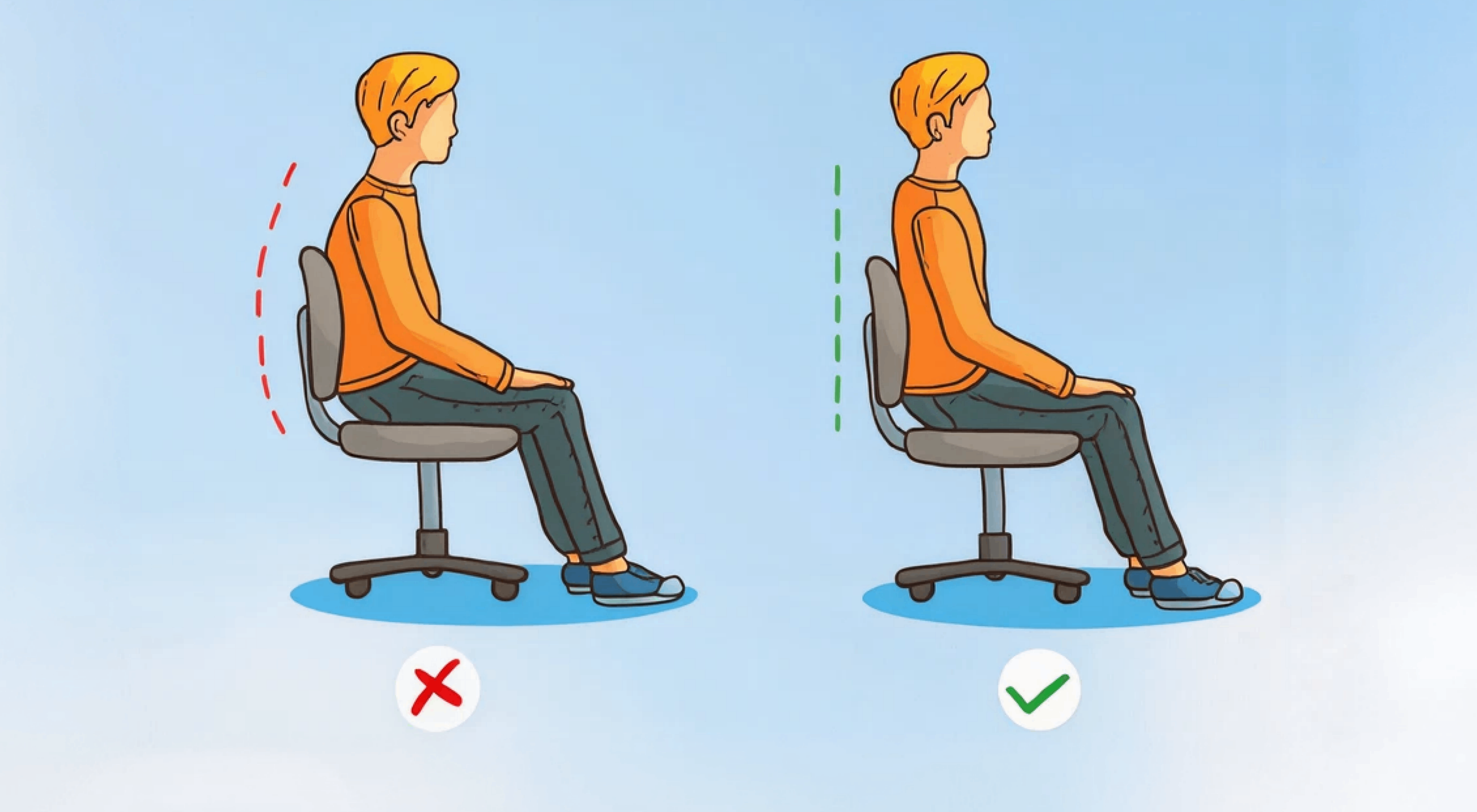
But keeping your spine “straight” does not mean making your back rigid or completely flat. A healthy spine naturally has gentle curves in the neck, upper back and lower back. Correct posture means maintaining these natural curves while keeping your head balanced over your shoulders and your shoulders aligned over your hips. (Source: MedlinePlus)
In simple words:
Sit upright, stand tall and avoid unnecessary slouching.
Good posture cannot prevent every spine condition, but it can reduce avoidable strain on your muscles, ligaments and spinal joints.
Why Is Good Posture Important for Spine Health?
Your spine supports your body during sitting, standing, walking, lifting and almost every other daily activity. When your body remains poorly aligned for long periods, some muscles have to work harder while others become weak or tight.
This may contribute to:
- Lower back pain after sitting for a long time
- Neck pain from mobile or computer use
- Shoulder and upper-back stiffness
- Muscle fatigue and spasms
- Headaches associated with neck strain
- Worsening discomfort in people with a disc problem
- Difficulty maintaining one position for long periods
Low back pain is one of the world’s most significant causes of disability. Staying physically active, making appropriate workplace adjustments, maintaining a healthy weight and getting adequate sleep are among the self-care measures recommended for managing and preventing episodes of non-specific lower back pain. (Source: World Health Organization)
What Is the Correct Sitting Posture?
People searching for how to sit with back pain or the best sitting posture for lower back pain should begin with a neutral and comfortable position.
While sitting:
- Keep your head balanced above your shoulders rather than pushing your neck forward.
- Relax your shoulders instead of rounding them.
- Sit with your back supported by the chair.
- Maintain the natural curve of your lower back.
- Keep both feet flat on the floor or on a footrest.
- Keep your knees approximately level with your hips.
- Place your keyboard and work materials within comfortable reach.
- Position the screen close to eye level so that you do not repeatedly bend your neck.
- Avoid sitting with a wallet or bulky object in your back pocket.
- Change position and get up regularly.
Even a good sitting position can become uncomfortable when maintained for too long. Therefore, the goal should not be to remain perfectly still. The better approach is to combine good posture with frequent movement.
Does Poor Posture Cause Back Pain?
Poor posture can place additional strain on the muscles and soft tissues supporting the spine. However, back pain is not always caused by posture alone.
Other possible causes include:
- Muscle or ligament strain
- Reduced physical activity
- Weak core and back muscles
- A herniated or slipped disc
- Sciatica
- Spinal stenosis
- Age-related disc changes
- Osteoporosis or spinal fracture
- Inflammatory conditions
- Infection or, rarely, a tumour
Back pain may therefore require an individual clinical assessment, particularly when it is severe, persistent or associated with neurological symptoms. Herniated discs, sciatica, spinal stenosis and muscular strain are among the recognised causes of acute lower back pain. (Source: MedlinePlus)
What Is a Slip Disc?
Slip disc is a commonly used search term in India. The medical terms are usually slipped disc, herniated disc, prolapsed disc or disc herniation.
The discs between the spinal bones act as cushions. When part of a disc bulges or herniates, it may irritate or compress a nearby nerve.
Possible slip-disc symptoms include:
- Lower back or neck pain
- Pain travelling into an arm or leg
- Numbness or pins and needles
- Muscle weakness
- Pain that worsens during coughing, bending or prolonged sitting
A disc bulge seen on an MRI does not automatically explain every episode of back pain. The scan findings must be interpreted together with the patient’s symptoms and physical examination.
What Is Sciatica?
Sciatica refers to nerve pain that commonly begins in the lower back or buttock and travels down the leg. It can occur when a spinal nerve contributing to the sciatic nerve becomes irritated or compressed.
People often describe sciatica as:
- Shooting pain in the leg
- Burning or electric-shock-like pain
- Tingling or numbness
- Pain extending below the knee
- Leg weakness in more significant cases
Sciatica is a symptom rather than a single disease. A slipped disc is one possible cause, but spinal stenosis and other conditions can also produce similar symptoms. (Source: Cleveland Clinic)
Can Correct Posture Cure a Slip Disc or Sciatica?
Correct posture may reduce mechanical strain and help some people feel more comfortable, but posture alone cannot be considered a cure for every case of slip disc, sciatica or cervical spondylosis.
Treatment depends on:
- The exact diagnosis
- Duration and severity of symptoms
- Whether there is nerve compression
- Presence of numbness or weakness
- The patient’s work and activity requirements
- Response to previous treatment
Management may include medical assessment, activity modification, physiotherapy, guided exercises, medicines or other specialist treatment. Surgery is required only in selected cases.
Avoid performing forceful stretches, spinal manipulation or online exercises without guidance when you have severe pain, neurological symptoms, osteoporosis, recent trauma or a diagnosed spinal disorder.
Neck Pain, Cervical Pain and Mobile-Phone Posture
Many Indian patients use the terms cervical pain, cervical problem or cervical spondylosis when describing neck pain.
Cervical spondylosis refers to age-related wear affecting the discs and joints of the neck. It may cause neck pain and stiffness, although some people have changes on scans without significant symptoms. (Source: Mayo Clinic)
Long periods spent looking down at a smartphone or laptop can also strain the neck and upper-back muscles.
To reduce neck strain:
- Bring the phone closer to eye level.
- Avoid holding the neck bent forward for long periods.
- Support your forearms while typing.
- Keep the computer monitor in front of you.
- Take frequent screen and movement breaks.
- Avoid sleeping with an excessively high pillow.
- Seek an assessment when pain spreads into the arm or causes numbness or weakness.
Seven Daily Habits for a Healthier Spine
1. Maintain a Neutral Posture
Keep your ears roughly aligned over your shoulders and your shoulders over your hips. Avoid forcing the spine into a rigid position.
2. Move Regularly
Do not remain seated continuously for several hours. Stand, walk or gently change position at regular intervals.
3. Strengthen Your Body Appropriately
Exercises that improve trunk, hip and back strength can support everyday movement. The correct programme should match your age, symptoms and medical condition.
4. Lift Objects Safely
Bring the object close to your body, use your hips and knees, and avoid twisting while carrying a heavy load.
5. Maintain a Healthy Body Weight
Excess body weight may increase the physical demands placed on the spine and lower-limb joints.
6. Pay Attention to Sleep
Use a comfortable sleeping position and supportive mattress. Side sleepers may feel more comfortable with a pillow between the knees, while some back sleepers benefit from support under the knees.
7. Do Not Ignore Persistent Symptoms
Early assessment can help distinguish muscular discomfort from nerve compression, fracture, infection or another condition requiring specific treatment.
When Should You Consult a Spine Specialist?
Searches such as best spine doctor near me, spine specialist near me, back pain doctor and sciatica specialist usually indicate that a patient is looking for professional evaluation.
Consider consulting a qualified doctor when:
- Back or neck pain is severe
- Pain continues or repeatedly returns
- Pain spreads into an arm or leg
- You experience numbness or tingling
- Your arm or leg feels weak
- Pain follows a fall, accident or injury
- You have osteoporosis or a history of cancer
- Pain is associated with unexplained fever or weight loss
- Symptoms interfere with walking, sleeping or daily activities
Spine Warning Signs That Need Urgent Medical Attention
Go to the nearest emergency department immediately when back pain is accompanied by:
- New difficulty controlling urine or stool
- Inability to pass urine normally
- Numbness around the inner thighs, genitals or buttocks
- Rapidly increasing weakness in one or both legs
- Severe back pain after a major accident
- Sudden paralysis or major loss of sensation
Bladder or bowel changes, saddle-area numbness and increasing leg weakness can indicate cauda equina syndrome, a rare but serious spinal emergency requiring urgent assessment. (Source: Buckinghamshire Healthcare NHS Trust)
Frequently Asked Questions
Is sitting straight good for back pain?
A supported, neutral sitting posture may reduce unnecessary muscular strain. However, remaining in one position for too long can still cause discomfort. Good posture should be combined with regular movement.
What is the best posture for lower back pain?
The best position varies between individuals. In general, keep your back supported, feet stable, shoulders relaxed and your lower spine in a comfortable natural curve.
Can poor posture cause a slip disc?
Disc problems usually develop through multiple factors, including age-related changes, physical loading, genetics, injury and lifestyle. Poor movement habits and prolonged inactivity may contribute to symptoms but should not automatically be treated as the sole cause.
Is walking good for back pain?
Gentle walking is helpful for many people with uncomplicated back pain and supports continued activity. Stop and obtain professional advice when walking causes severe pain, increasing weakness or loss of balance.
Which doctor should I consult for back pain?
Depending on the symptoms, evaluation may involve a neurologist, neurosurgeon, orthopaedic spine specialist, pain specialist, rehabilitation physician or qualified physiotherapist. Global Neuro And Spine Care can help patients identify an appropriate specialist.
Take the First Step Towards Better Spine Health
Your posture is one of the easiest daily habits you can improve.
Remember:
Sit upright. Stand tall. Keep moving. Protect your spine.
To learn more about back pain, lower back pain, neck pain, cervical spondylosis, slip disc, sciatica and spine-health exercises, download the Global Neuro And Spine Care App.
You can use the app to access educational information and connect with neuro and spine-care professionals.
Have a spine-health query? Send it on WhatsApp: 9721108108
Global Neuro And Spine Care Pvt Ltd
Expert guidance for better brain and spine health.
Medical disclaimer: This article is intended for general awareness and does not replace an examination, diagnosis or personalised treatment by a qualified healthcare professional.