Dementia
Symptoms & Causes
Overview
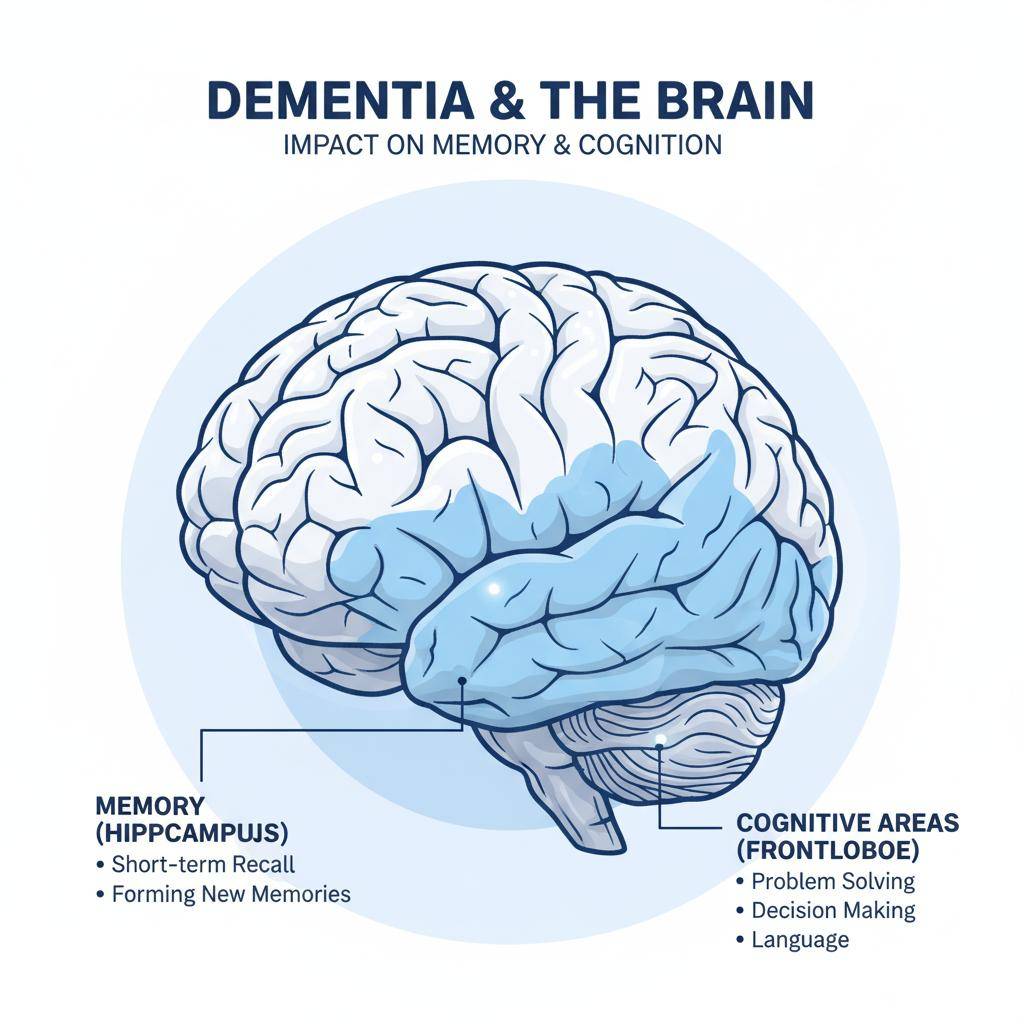
Dementia is a condition that affects memory, thinking, communication, judgment, and the ability to perform everyday activities. It is not a single disease but a group of symptoms caused by changes or damage to the brain. People with dementia may gradually experience difficulty remembering things, understanding conversations, making decisions, or managing daily routines. Although dementia is more common in older adults, it is not a normal part of ageing. Early recognition, medical evaluation, supportive care, and appropriate treatment can help improve quality of life for patients and their families.
What Is Dementia? Symptoms You Should Know
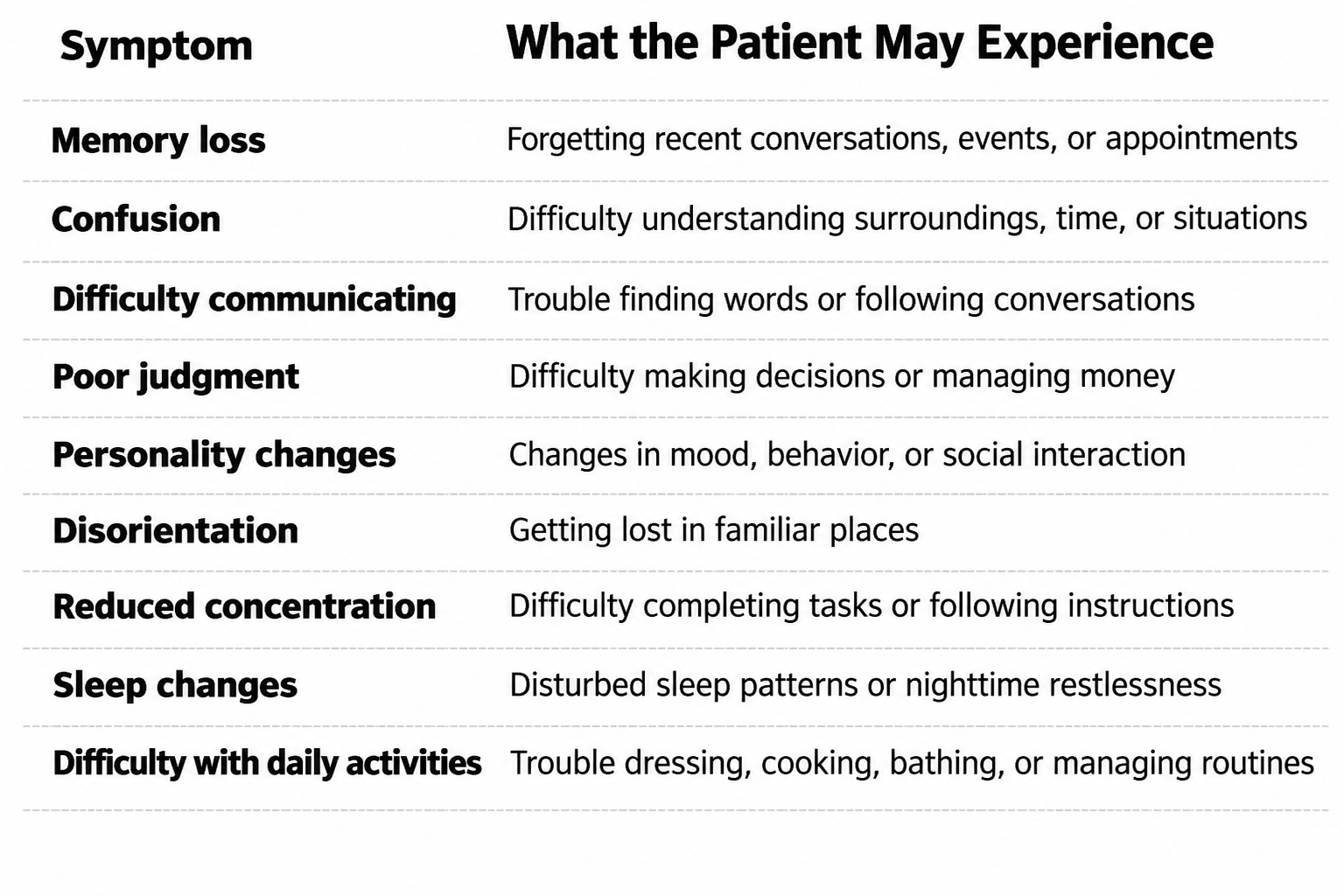
Dementia affects brain functions that are important for daily life, including memory, language, attention, reasoning, behavior, and emotional control.
In the early stages, symptoms may be mild and difficult to notice. Over time, they may become more frequent and interfere with independence, communication, and personal care.
Common symptoms of dementia
Early warning signs
- Repeatedly asking the same questions
- Frequently misplacing objects
- Forgetting familiar names
- Difficulty managing finances
- Losing interest in hobbies
- Struggling with familiar tasks
- Becoming unusually anxious, irritable, or withdrawn
These symptoms should not automatically be assumed to be dementia. Medical evaluation is important because some conditions affecting memory and thinking may be treatable.
Causes, Types and Risk Factors of Dementia
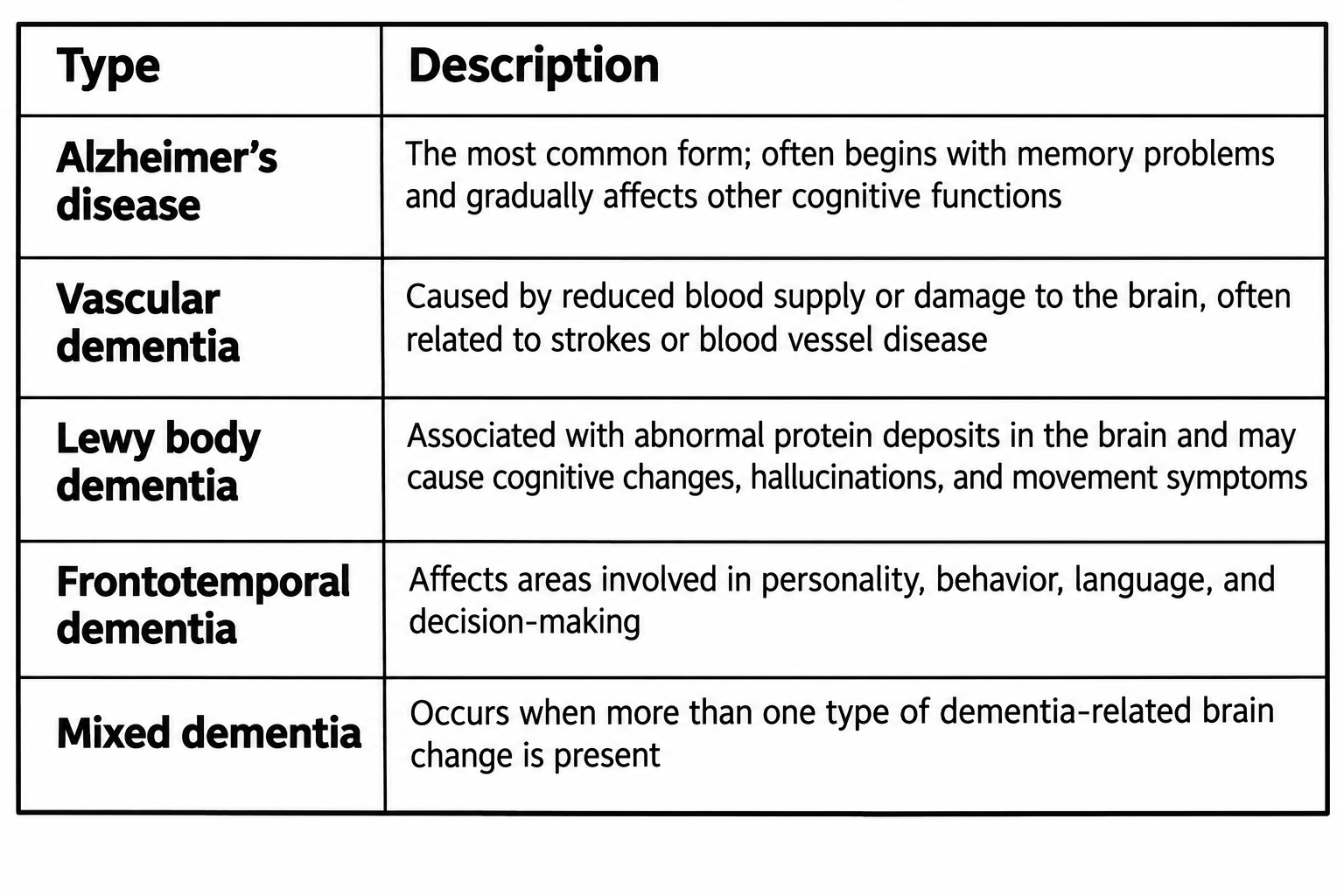
Dementia develops when brain cells or their connections become damaged, affecting the brain's ability to process and store information. Different types of dementia have different causes and patterns of symptoms.
Common types of dementia
Risk factors
Some factors that may increase the risk of dementia include:
- Increasing age
- Family history of certain types of dementia
- Cardiovascular disease
- High blood pressure
- Diabetes
- High cholesterol
- Smoking
- Physical inactivity
- Certain neurological conditions
- Previous significant brain injury
Age is an important risk factor, but dementia is not an inevitable consequence of getting older.
Diagnosis & Treatments
Diagnosis and Treatment of Dementia
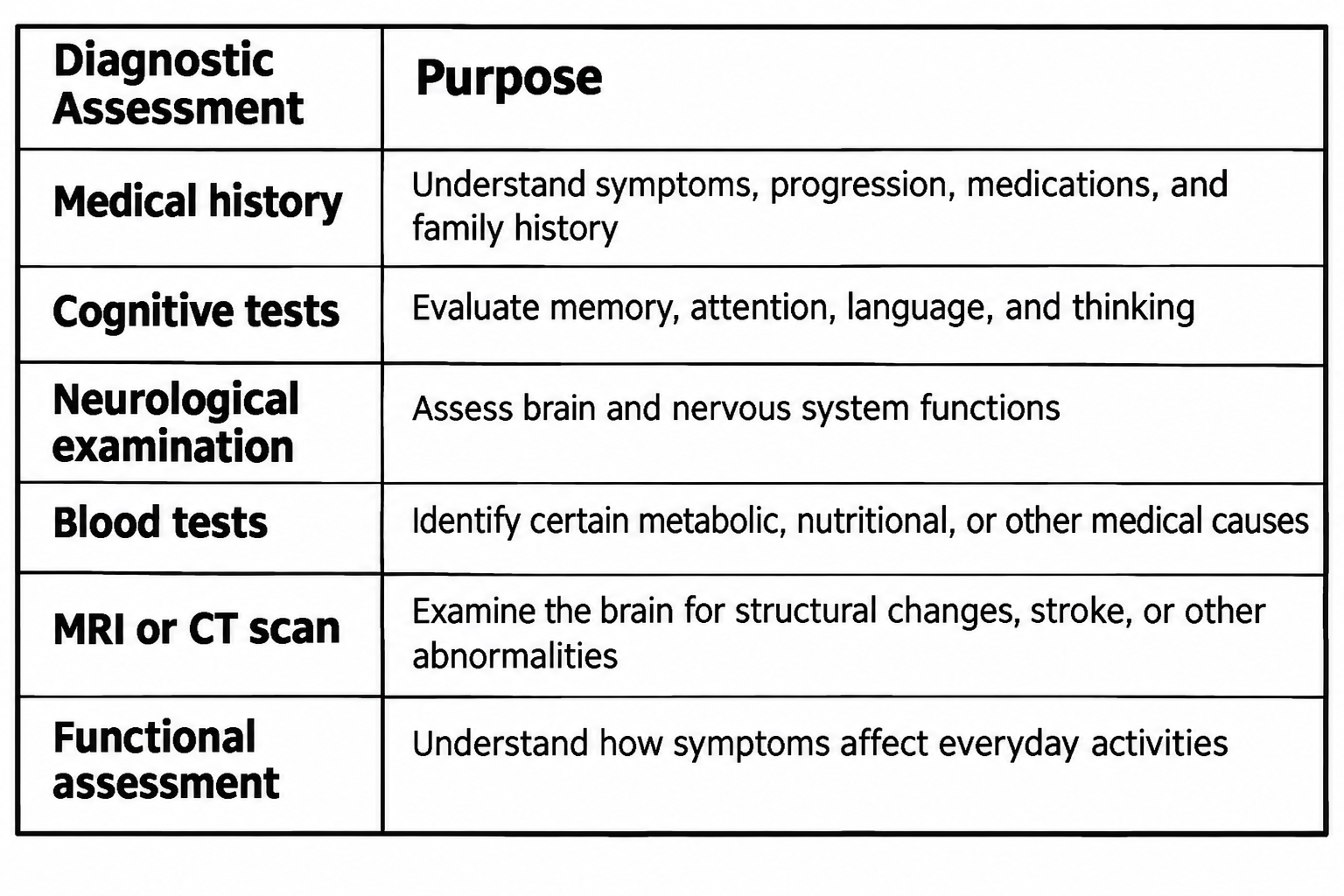
Dementia diagnosis involves understanding the patient's symptoms, medical history, cognitive changes, and ability to perform daily activities. A doctor may also evaluate whether memory or behavioral changes are caused by other medical conditions.
How is dementia diagnosed?
Treatment options for dementia
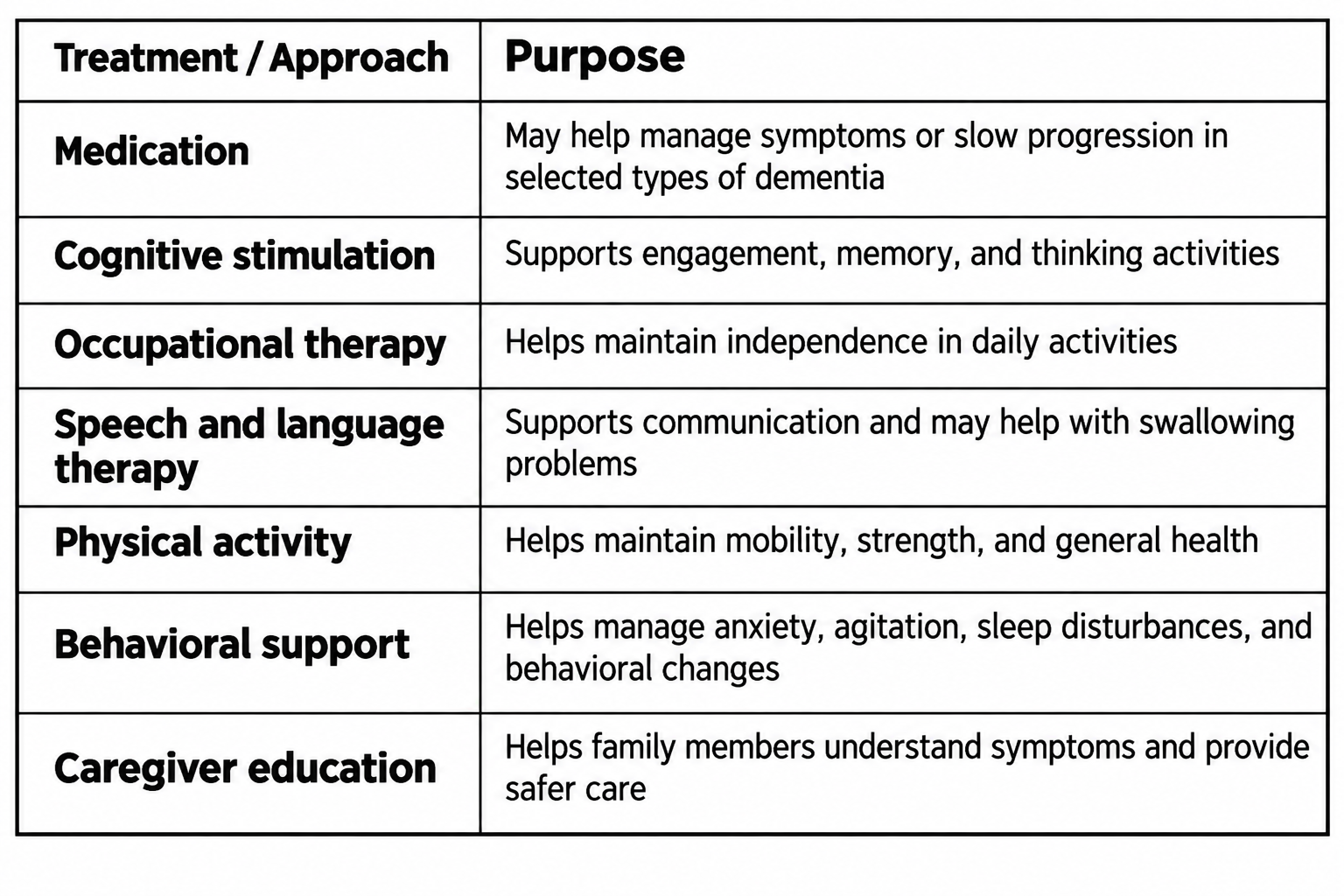
Dementia treatment depends on its type, cause, stage, and symptoms. While many forms of dementia are progressive, treatment and support may help manage symptoms and maintain quality of life.
Living With Dementia: Daily Care and Support
Dementia can affect both patients and their families. As the condition progresses, patients may need increasing support with daily activities, communication, mobility, safety, and personal care.
Practical tips for dementia care
- Maintain a daily routine: Regular meal, sleep, and activity timings may reduce confusion.
- Keep the environment familiar: Avoid unnecessary changes to furniture and surroundings.
- Communicate simply: Use short sentences and give one instruction at a time.
- Be patient: Allow sufficient time for the person to respond.
- Encourage independence: Help only where needed while allowing the patient to perform safe activities.
- Promote physical activity: Encourage suitable movement and exercises based on the patient's ability.
- Ensure home safety: Reduce fall risks, improve lighting, and secure potentially dangerous objects.
- Support emotional well-being: Encourage familiar music, hobbies, family interaction, and meaningful activities.
When should medical attention be sought urgently?
Sudden confusion is not typical of the gradual progression of dementia and may indicate another medical problem.
Seek urgent medical assessment if the person develops:
- Sudden confusion or a major change in behavior
- Sudden weakness on one side of the body
- Difficulty speaking or understanding speech
- New severe headache
- Loss of consciousness
- Sudden difficulty walking
- Seizures
Sudden neurological symptoms may indicate a stroke or another emergency and should not be assumed to be dementia.
Care at Global
Can Dementia Be Prevented or Its Progression Reduced?
Not all cases of dementia can be prevented. However, maintaining brain and cardiovascular health may help reduce certain risk factors associated with cognitive decline.
Healthy habits for brain health
- Stay physically active according to your ability.
- Maintain healthy blood pressure and blood sugar levels.
- Eat a balanced diet rich in vegetables, fruits, and nutritious foods.
- Avoid smoking and limit harmful alcohol consumption.
- Maintain social connections.
- Keep the brain active through reading, puzzles, learning, and hobbies.
- Manage hearing and vision problems.
- Get adequate sleep.
- Seek medical attention for persistent memory or thinking problems.
Early evaluation can help identify the type of cognitive problem, rule out potentially treatable causes, and plan appropriate care.
At Global Neuro & Spine Care, patients and families can seek guidance regarding neurological symptoms and specialist evaluation.
Explore our Neurosurgeon Consultation services for specialist guidance.
Conclusion
Dementia is a condition that affects memory, thinking, communication, behavior, and independence. Although it is more common with increasing age, it is not a normal part of ageing. Recognizing symptoms early, obtaining an appropriate medical evaluation, and providing patient-centered care can help improve safety and quality of life. Family support and timely neurological assessment are important throughout the journey.
Frequently Asked Questions (FAQs)
1. Is dementia a normal part of ageing?
No. Although dementia becomes more common with age, it is not a normal part of ageing. Occasional forgetfulness can happen as people get older, but persistent memory loss, confusion, difficulty making decisions, and problems performing everyday activities may require medical evaluation.
2. What is the most common type of dementia?
Alzheimer's disease is the most common type of dementia. It typically causes progressive memory problems and may gradually affect thinking, language, judgment, behavior, and the ability to perform everyday activities. Other types include vascular dementia, Lewy body dementia, and frontotemporal dementia.
3. Can dementia be cured?
Most progressive forms of dementia currently do not have a complete cure. However, certain medications, supportive therapies, lifestyle measures, and structured care may help manage symptoms, improve quality of life, and support patients and caregivers. Some conditions that cause dementia-like symptoms may be treatable.
4. What is the difference between dementia and Alzheimer's disease?
Dementia is a general term for a decline in cognitive abilities that affects daily life. Alzheimer's disease is a specific brain disease and the most common cause of dementia. In simple terms, Alzheimer's disease is one type of dementia, but not all dementia is caused by Alzheimer's disease.
5. When should someone see a doctor for memory loss?
Medical evaluation is recommended when memory loss becomes frequent, affects daily activities, causes confusion, or leads to difficulty managing familiar tasks. If confusion or neurological symptoms develop suddenly, seek urgent medical attention because they may indicate a stroke, infection, or another medical emergency.