Craniosynostosis
Symptoms & Causes
Overview
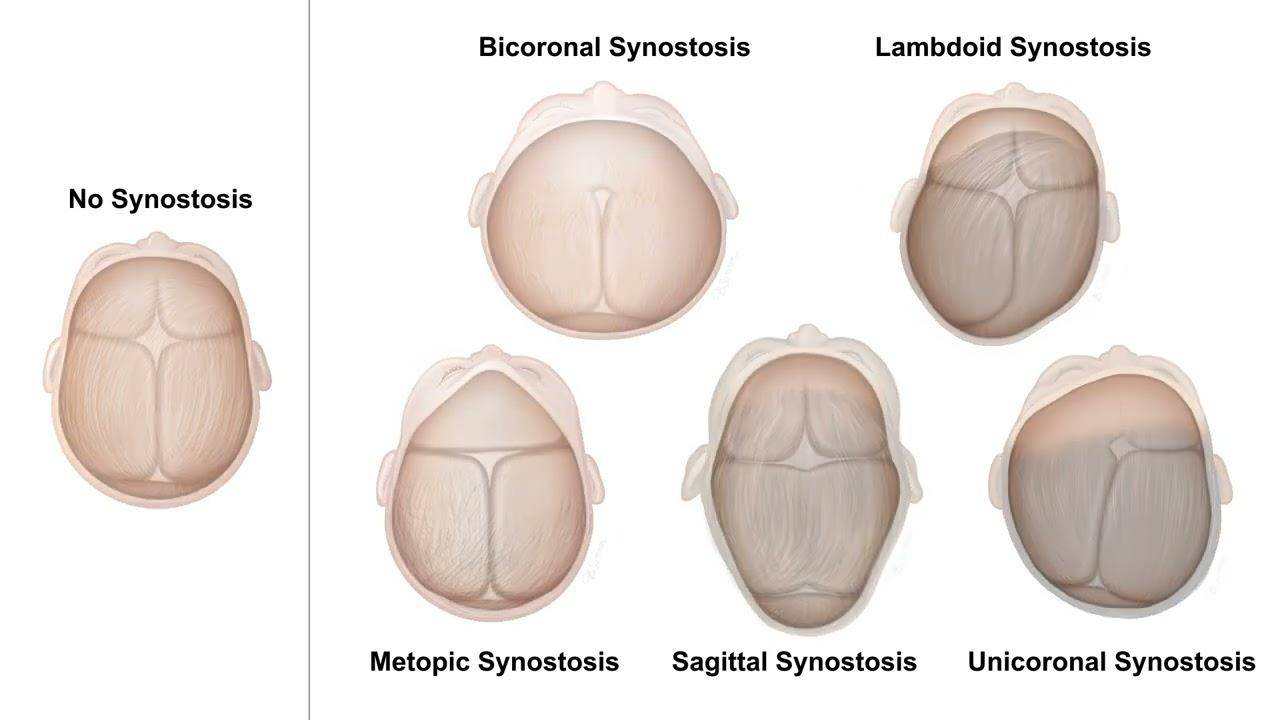
Craniosynostosis is a condition present at birth in which one or more of the fibrous joints between a baby's skull bones, called cranial sutures, close too early. These sutures normally remain flexible during infancy, allowing the skull to expand as the brain grows. When a suture closes prematurely, skull growth may become restricted in one direction, resulting in an unusual head shape.
The condition may affect one or more sutures and can vary in severity. Some babies may have only a noticeable change in head shape, while others may develop increased pressure inside the skull or require more complex treatment. Early diagnosis is important because timely treatment can help protect brain growth and development.
Understanding the Skull and Craniosynostosis
A baby's skull is not a single solid bone. It is made up of several plates of bone connected by flexible fibrous joints called cranial sutures.
These sutures allow the skull to expand as the brain grows rapidly during infancy and early childhood.
In craniosynostosis, one or more of these sutures close before their normal time. Since the brain continues growing, the skull may grow differently in the areas where sutures remain open, resulting in an abnormal head shape.
Types of Craniosynostosis
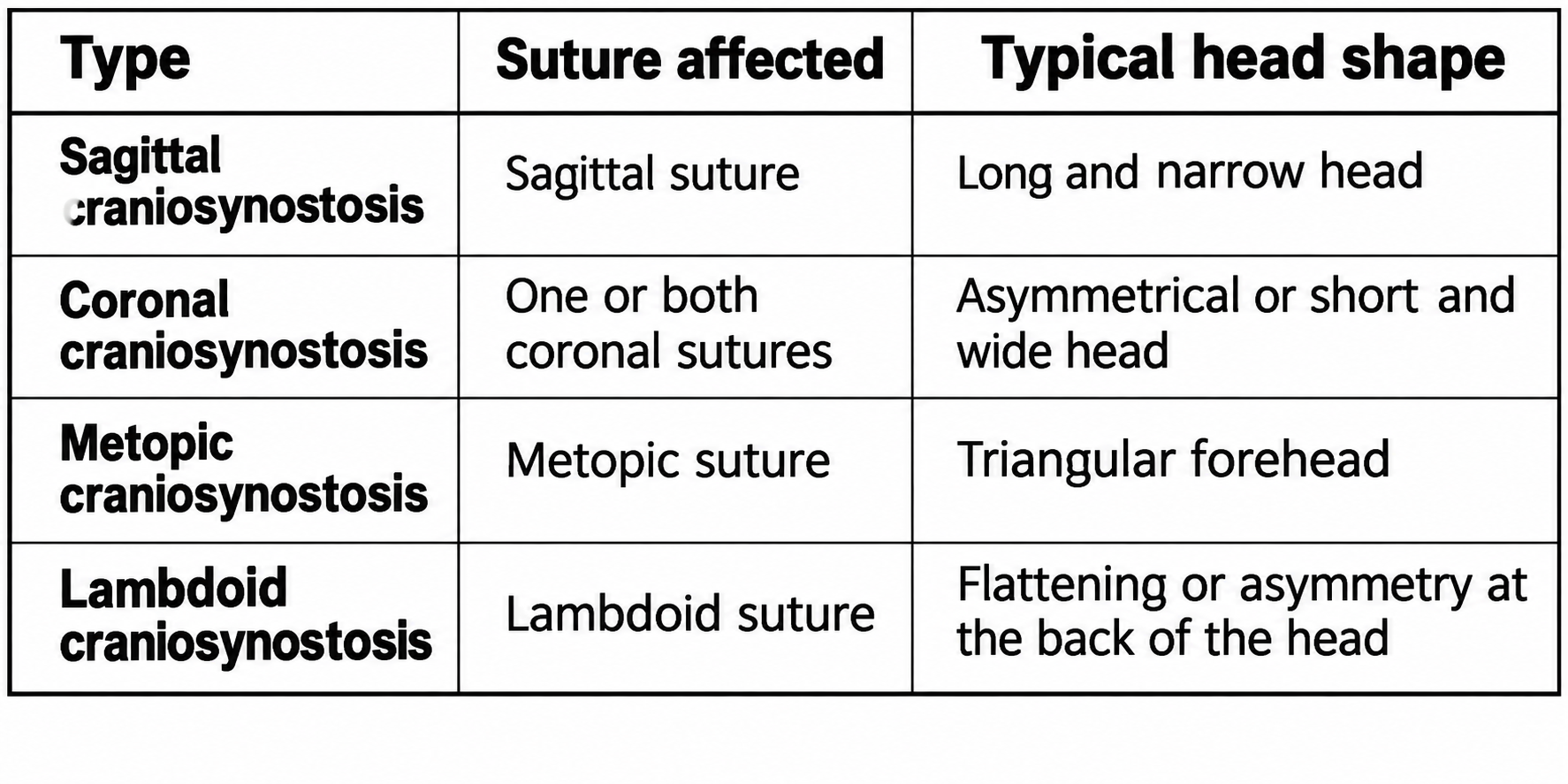
Why Does the Type Matter?
The type of craniosynostosis determines:
- The direction in which skull growth may be restricted
- The appearance of the forehead and back of the head
- Whether facial asymmetry may occur
- The potential effect on brain growth
- The treatment approach and timing of surgery
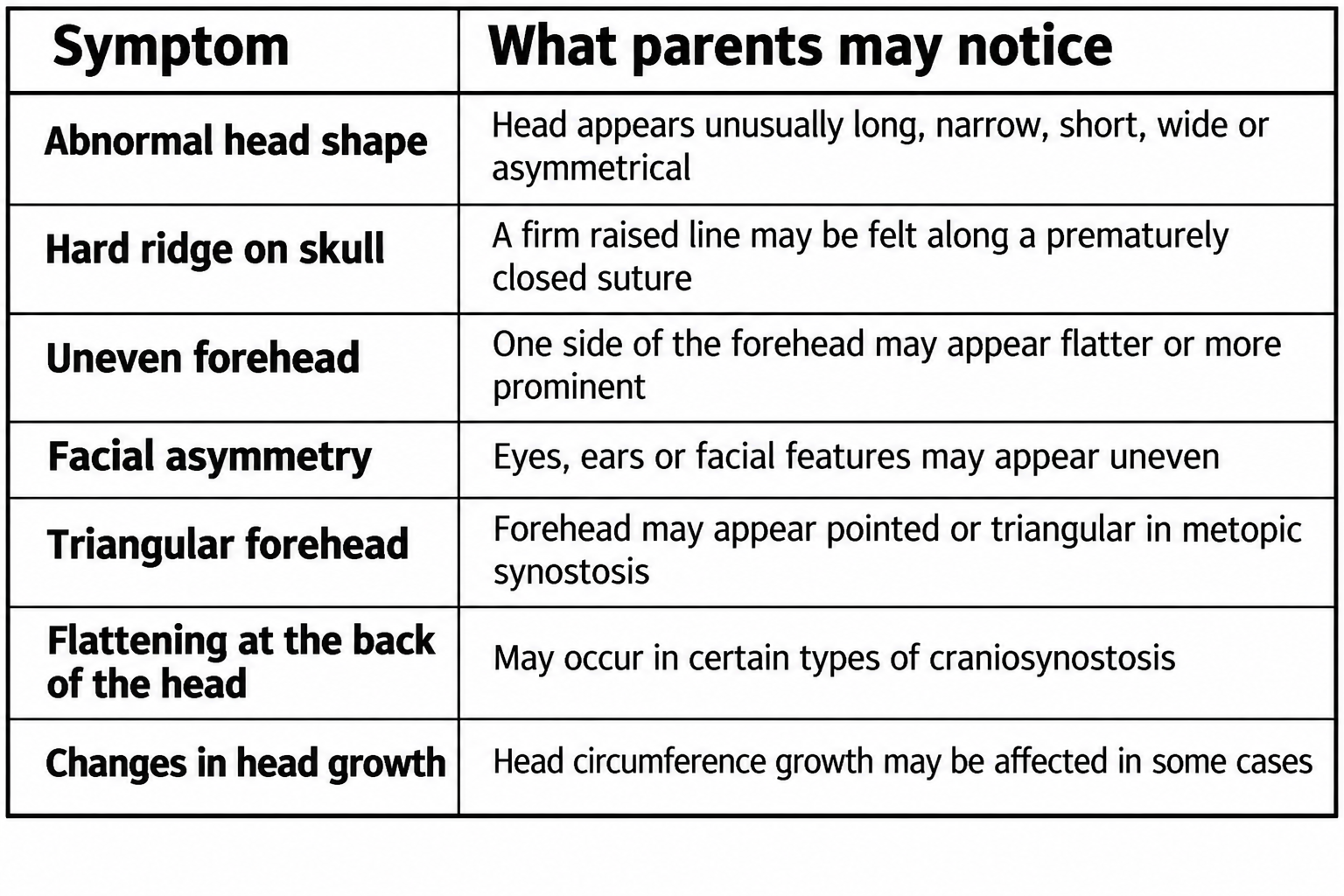
Craniosynostosis Symptoms : What Parents Should Look For
The symptoms of craniosynostosis may be visible at birth or become more noticeable during the first few months of a baby's life.
The most common sign is an unusual skull shape that may become more pronounced as the child grows.
Common Craniosynostosis Symptoms
Symptoms That May Suggest Increased Pressure Inside the Skull
Some children with craniosynostosis may develop increased intracranial pressure, which requires prompt medical assessment.
Possible symptoms include:
- Persistent vomiting
- Unusual irritability
- Excessive sleepiness
- Poor feeding
- Developmental concerns
- Persistent headaches in older children
- Changes in vision
- Bulging of the eyes in certain complex cases
Seek urgent medical care if a baby or child develops repeated vomiting, seizures, marked drowsiness, sudden weakness, significant changes in consciousness or other severe symptoms.
Craniosynostosis Causes and Risk Factors
Craniosynostosis develops when a skull suture closes earlier than expected. In many babies, the exact cause is not known.
Possible Causes
1. Abnormal development of cranial sutures
The bones and connective tissues of the skull may develop in a way that causes a suture to fuse prematurely.
2. Genetic factors
Some cases are associated with genetic changes. These may occur independently or be inherited.
3. Syndromic craniosynostosis
Craniosynostosis may occur as part of certain genetic syndromes, which can affect several parts of the body, including the skull, face, hands and feet.
Risk Factors and Associated Conditions
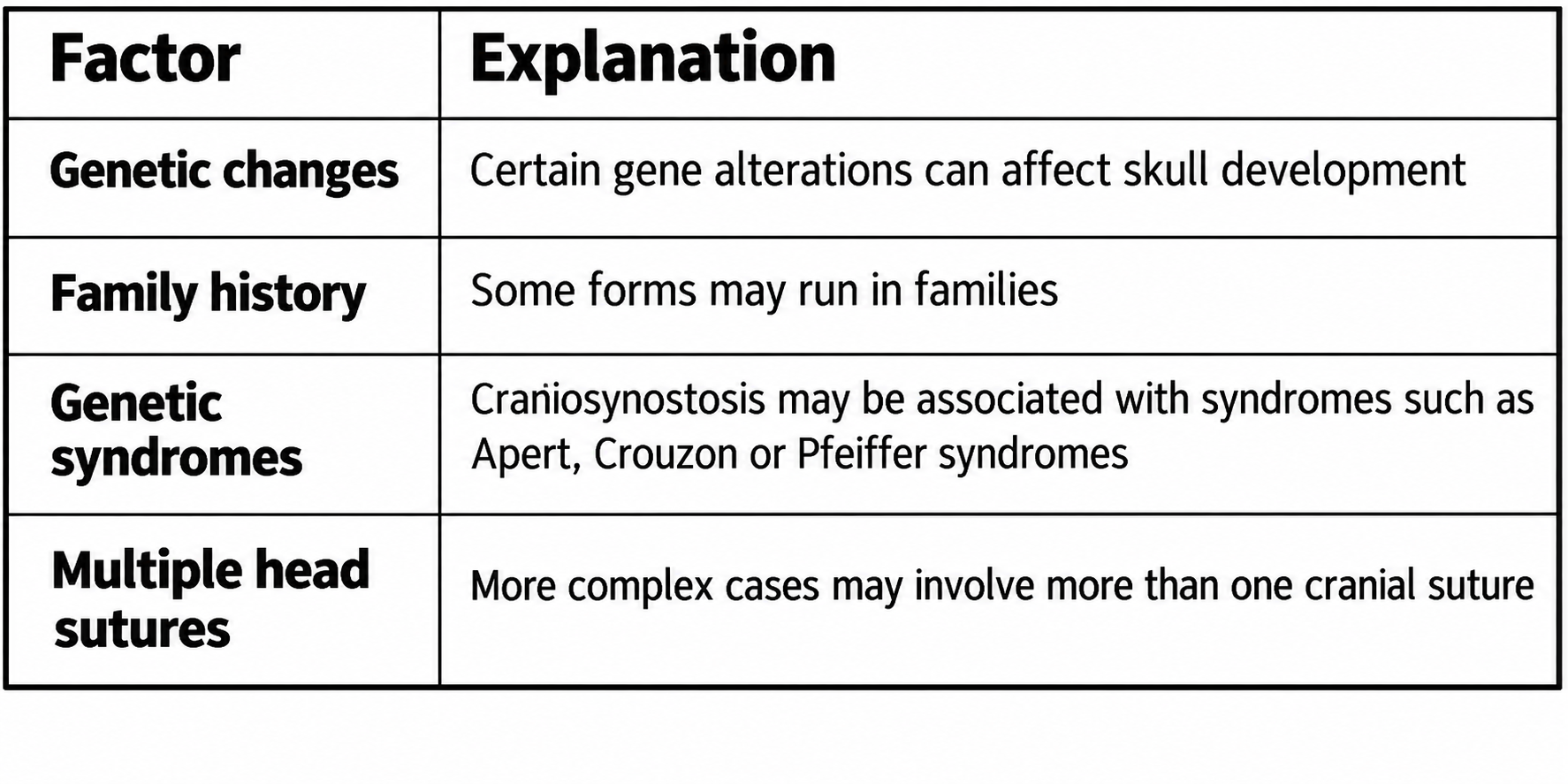
Not every baby with craniosynostosis has a genetic syndrome. Many cases occur without a known family history.
Diagnosis & Treatments
How Is Craniosynostosis Diagnosed?
Diagnosis usually begins with a detailed physical examination of the baby's head shape, skull sutures and overall growth.
The doctor may assess the head circumference, facial symmetry, fontanels and skull contour to determine whether the shape is consistent with craniosynostosis.
Diagnostic Tests
Why Early Diagnosis Is Important
Early diagnosis allows doctors to:
- Identify the affected suture
- Assess whether brain growth may be restricted
- Monitor head growth and development
- Determine whether surgery is needed
- Plan the most appropriate treatment and timing
Not every unusual head shape is caused by craniosynostosis. Positional flattening of the skull, for example, can occur when a baby spends prolonged periods in one position. The distinction is important because the management of positional skull flattening differs from craniosynostosis.
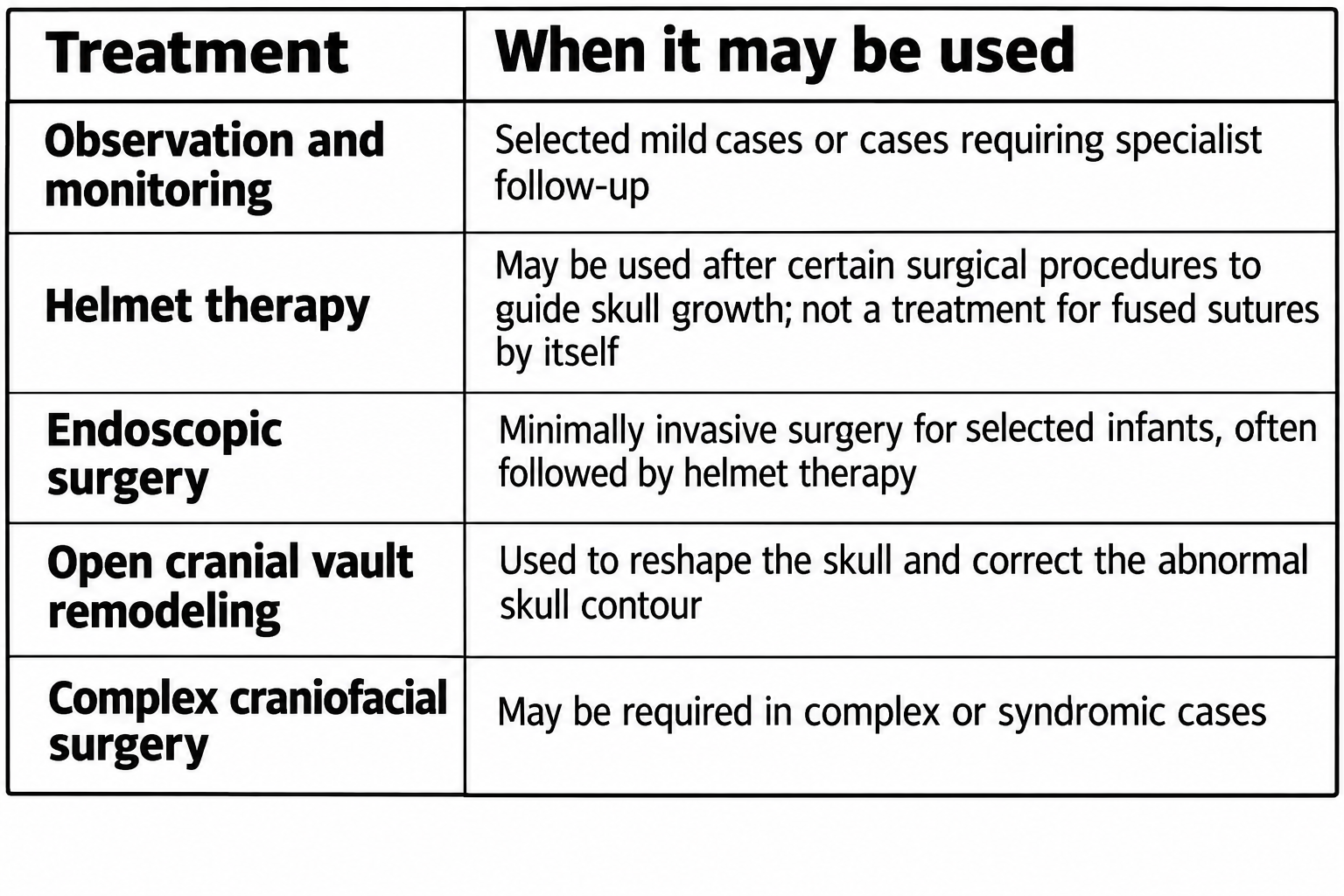
Craniosynostosis Treatment: What Are the Options?
Treatment depends on the type of craniosynostosis, the number of sutures involved, the child's age, skull shape, brain growth and whether increased pressure inside the skull is present.
The main treatment for significant craniosynostosis is surgery. Some carefully selected cases may be monitored by a specialist.
Treatment Options
Craniosynostosis Surgery
Surgery may be recommended to:
- Correct abnormal skull shape
- Allow adequate space for brain growth
- Reduce or address increased intracranial pressure when present
- Improve facial and skull symmetry
- Support normal development
The timing and type of surgery depend on the baby's age, the affected suture and the severity of the condition.
Types of Surgical Procedures
Endoscopic craniosynostosis surgery
A minimally invasive procedure performed through smaller incisions in selected young infants. It may be followed by helmet therapy to guide skull shape as the baby grows.
Open cranial vault remodeling
A procedure in which skull bones are reshaped and repositioned to improve skull contour and create space for brain growth.
Cranial vault expansion
In certain cases, surgery may expand the skull to address restricted space or elevated intracranial pressure.
The surgical plan is individualized. Not every child needs the same procedure.
Recovery After Craniosynostosis Surgery
Recovery depends on the type of procedure, the child's age and the complexity of the condition.
After surgery, the child may require hospital monitoring for swelling, pain, blood loss, neurological status and overall recovery.
What Parents Can Expect
- Hospital monitoring after surgery
- Pain management according to the treating team
- Monitoring of swelling and wound healing
- Follow-up appointments with the surgical team
- Helmet therapy if prescribed
- Monitoring head growth and developmental milestones
Follow-Up Care
Long-term follow-up may be important even after successful surgery. Doctors may monitor:
- Skull growth and shape
- Head circumference
- Vision and eye alignment
- Developmental milestones
- Neurological symptoms
- Signs of raised intracranial pressure
- Additional craniofacial concerns in complex cases
Parents should follow the treating surgeon's instructions regarding wound care, activity, helmet use and follow-up.
Can Craniosynostosis Be Prevented?
In most cases, craniosynostosis cannot be prevented because it is related to skull development and may involve genetic factors.
However, parents can help support their child's health by:
- Attending routine newborn and pediatric checkups
- Monitoring head growth
- Reporting unusual changes in skull shape
- Following recommended developmental assessments
- Seeking early specialist evaluation if abnormalities are noticed
Early evaluation is more useful than waiting for the head shape to become significantly abnormal.
When Should Parents Consult a Specialist?
Parents should seek medical evaluation if they notice:
- A long and narrow head shape
- A triangular forehead
- Persistent asymmetry of the skull
- A hard ridge along a skull suture
- Uneven facial or eye positioning
- Abnormal head growth
- Developmental concerns
A pediatrician may refer the child to a pediatric neurosurgeon or craniofacial specialist for further evaluation.
Care at Global
Conclusion
Craniosynostosis is a condition in which one or more skull sutures close prematurely, affecting the shape of a baby's head and potentially the space available for brain growth. The condition ranges from mild skull shape differences to complex cases requiring specialized treatment.
Recognizing an unusual head shape early, obtaining an accurate diagnosis and following the recommendations of a pediatric neurosurgical team are important steps. With appropriate evaluation and treatment, many children with craniosynostosis can achieve improved skull shape and continue to develop well.
If you notice unusual skull growth or head shape in your baby, do not ignore it. Early specialist evaluation can help determine whether treatment is needed.
Frequently Asked Questions (FAQs)
1. Is craniosynostosis a serious condition?
Craniosynostosis can range from a mild skull shape abnormality to a condition that affects brain growth or causes increased pressure inside the skull. The severity depends on the affected suture, the number of sutures involved and whether other abnormalities are present. Early evaluation helps determine the appropriate treatment.
2. Can craniosynostosis affect brain development?
In some cases, craniosynostosis may restrict skull growth or contribute to increased intracranial pressure, potentially affecting development. However, outcomes vary significantly. Many children do well with timely diagnosis, appropriate treatment and regular developmental follow-up.
3. Does every child with craniosynostosis need surgery?
No. Treatment depends on the type and severity of craniosynostosis. However, surgery is commonly recommended for significant cases to correct skull shape and support brain growth. A specialist determines whether observation or surgical treatment is appropriate.
4. At what age is craniosynostosis treated?
Treatment timing depends on the type of craniosynostosis and the child's age. Some minimally invasive procedures are performed during early infancy, while other procedures may be planned at different ages. Early consultation helps doctors determine the best timing.
5. Can craniosynostosis come back after surgery?
Premature suture fusion itself is generally addressed through surgery, but children may require long-term follow-up to monitor skull growth, head shape, pressure inside the skull, vision and development. Some complex cases may require additional procedures depending on their progress.