
Carpal Tunnel Syndrome
Symptoms & Causes
Overview
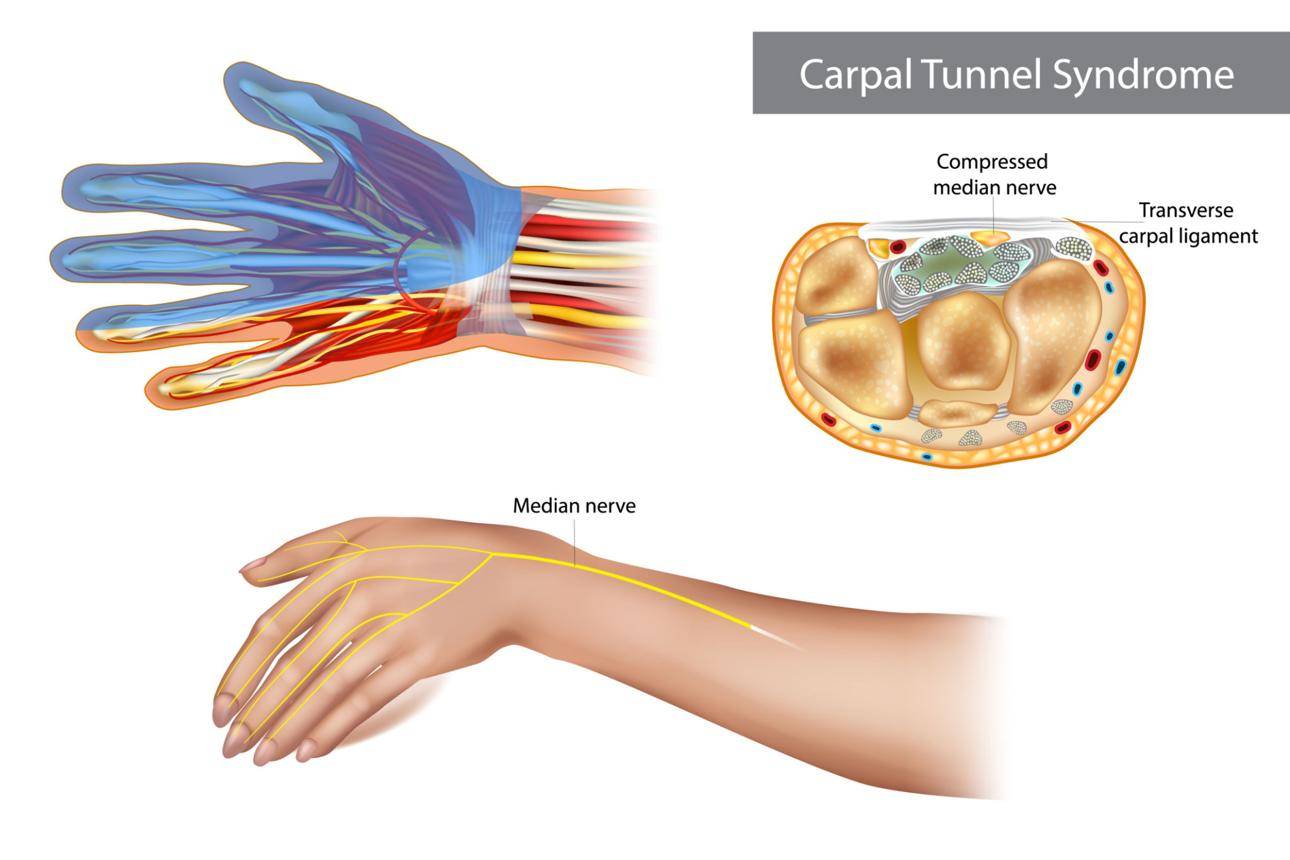
Carpal Tunnel Syndrome (CTS) is a condition caused by pressure or compression of the median nerve as it passes through a narrow passage in the wrist called the carpal tunnel. This nerve provides sensation to the thumb, index finger, middle finger and part of the ring finger, while also helping control certain thumb movements.
When the median nerve becomes compressed, a person may experience numbness, tingling, burning sensations, wrist pain, weakness or difficulty holding objects. Symptoms often begin gradually and may be more noticeable at night. Early diagnosis and treatment can help relieve symptoms and reduce the risk of long-term nerve damage.
Understanding Carpal Tunnel Syndrome
The carpal tunnel is a narrow passage located at the wrist. It is formed by wrist bones and a strong ligament that covers the passage.
Inside this tunnel pass:
- The median nerve
- Tendons that help bend the fingers and thumb
Because the tunnel is relatively narrow, swelling or increased pressure inside it can compress the median nerve.
What Happens in Carpal Tunnel Syndrome?
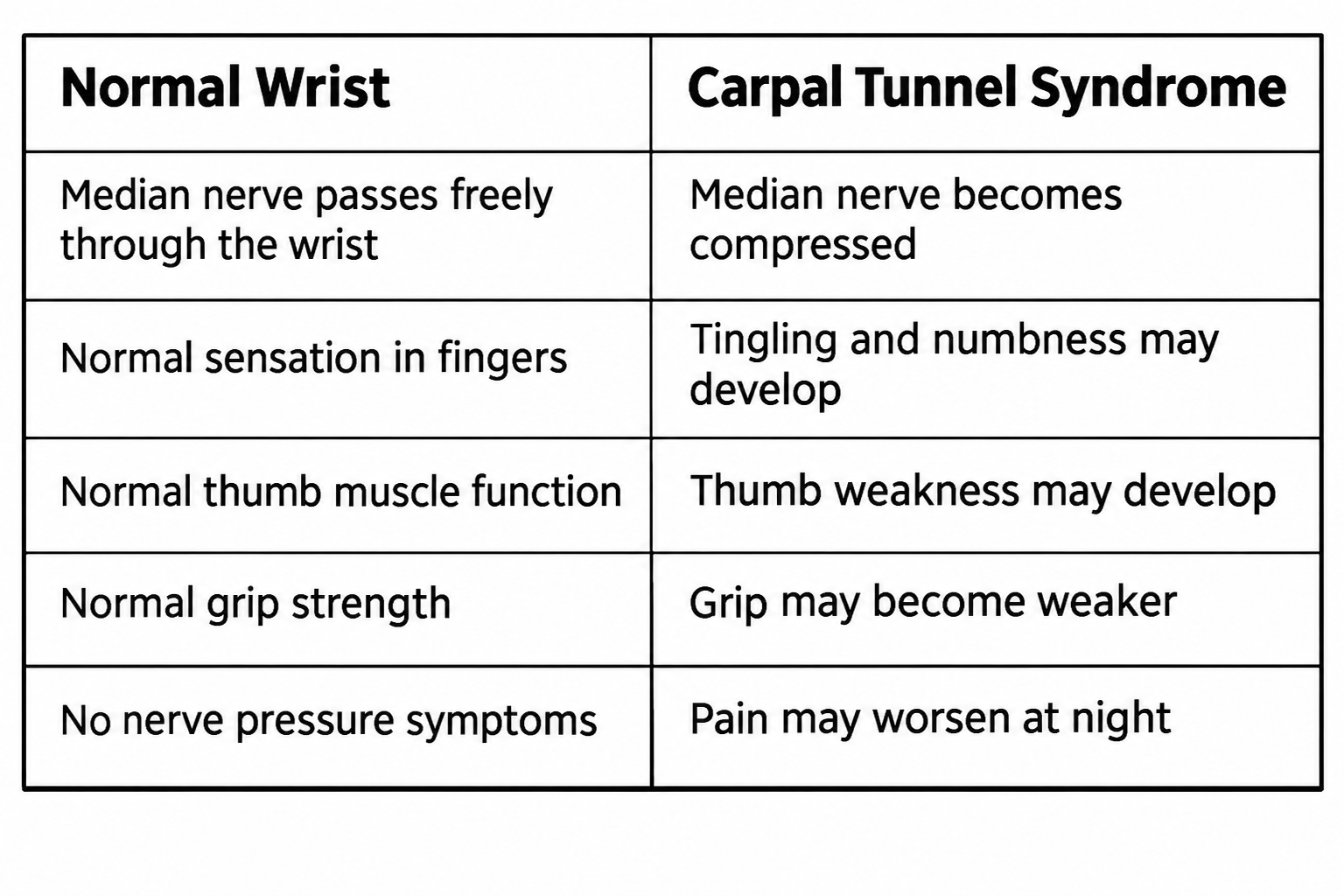
The median nerve is particularly important for sensation in the thumb, index finger, middle finger and part of the ring finger. The little finger is generally not affected by typical carpal tunnel syndrome.
Carpal Tunnel Syndrome Symptoms: Early Warning Signs
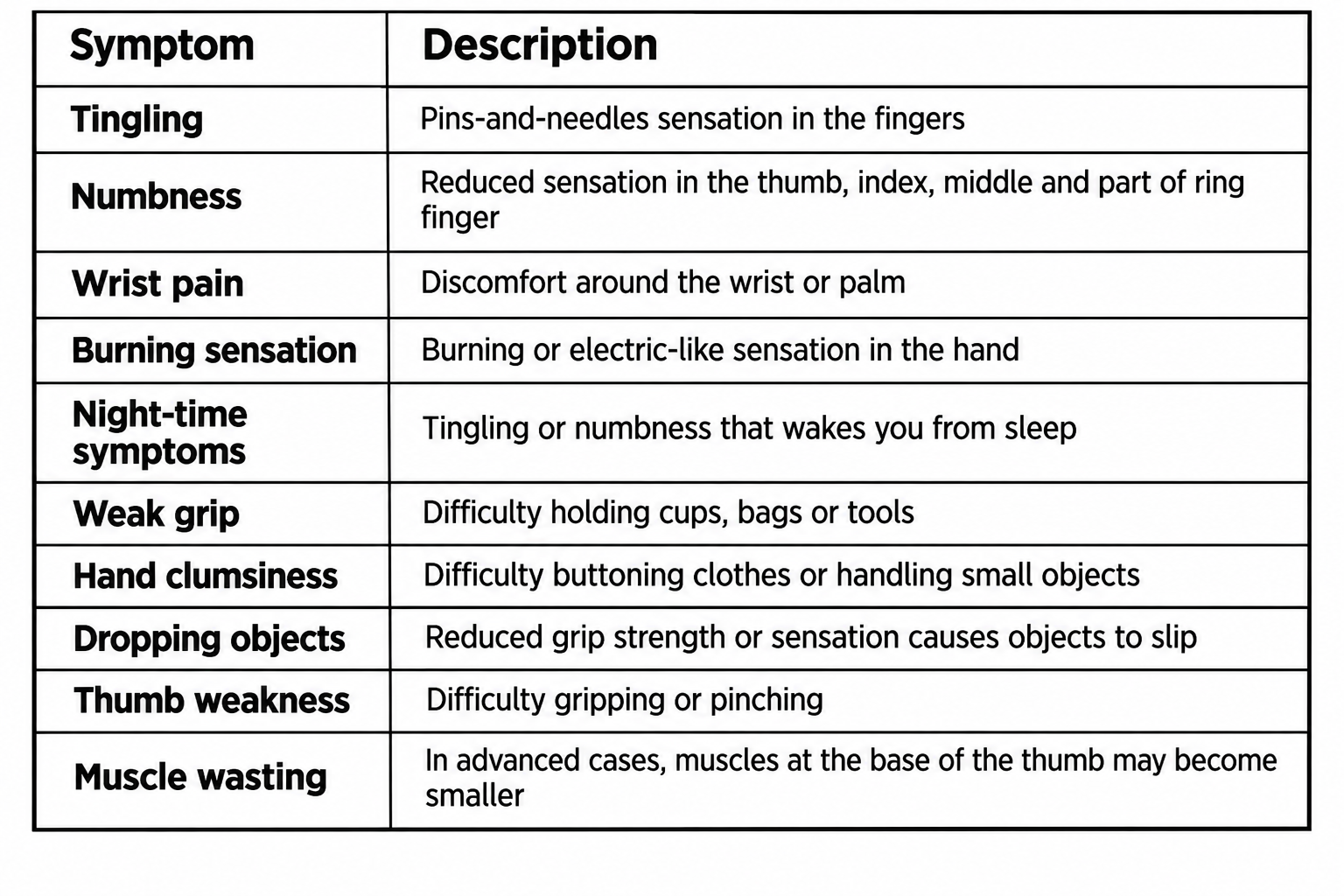
Carpal tunnel syndrome symptoms often start slowly. Initially, symptoms may appear occasionally and disappear on their own. As the condition progresses, they may become more frequent and persistent.
Common Symptoms of Carpal Tunnel Syndrome
Why Are Symptoms Often Worse at Night?
Many people sleep with their wrists bent. This position may increase pressure within the carpal tunnel, worsening compression of the median nerve.
Some people wake up with numb or tingling fingers and instinctively shake their hands to relieve the sensation.
Symptoms That Should Not Be Ignored
Consult a healthcare professional if you experience:
- Persistent numbness in the fingers
- Increasing hand weakness
- Difficulty gripping or holding objects
- Frequent dropping of objects
- Visible muscle wasting near the base of the thumb
- Symptoms that interfere with sleep or daily activities
Persistent numbness or progressive weakness may indicate ongoing nerve compression. Delayed treatment can increase the risk of lasting nerve damage.
Carpal Tunnel Syndrome Causes and Risk Factors
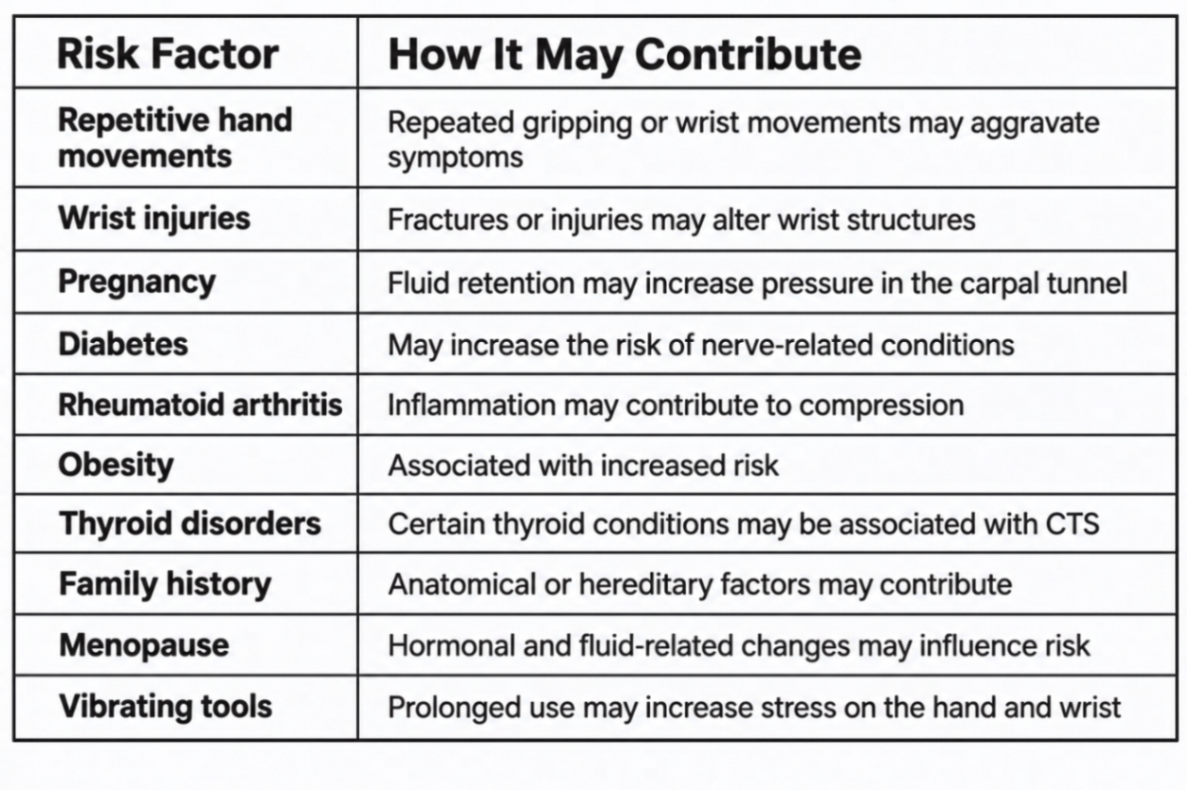
Carpal tunnel syndrome occurs when pressure on the median nerve increases within the wrist. This pressure may result from swelling, inflammation, structural changes or other conditions affecting the wrist.
In many cases, there may not be a single identifiable cause.
Common Causes and Risk Factors
Does Typing Cause Carpal Tunnel Syndrome?
Typing and computer use are commonly blamed for carpal tunnel syndrome, but a direct cause-and-effect relationship has not been firmly established.
However, prolonged activities that involve awkward wrist positions, forceful gripping or repetitive movements may aggravate symptoms in some people.
Maintaining comfortable wrist positions, taking regular breaks and avoiding prolonged pressure on the wrist may help reduce discomfort.
Diagnosis & Treatments
How Is Carpal Tunnel Syndrome Diagnosed?
Diagnosis usually begins with a detailed medical history and physical examination.
The doctor may ask:
- Which fingers are affected?
- Do symptoms occur at night?
- How long have you had numbness or pain?
- Does shaking the hand relieve symptoms?
- Are you experiencing weakness or dropping objects?
- Do you have diabetes, thyroid disease or arthritis?
- Have you had any previous wrist injuries?
Diagnostic Tests for Carpal Tunnel Syndrome
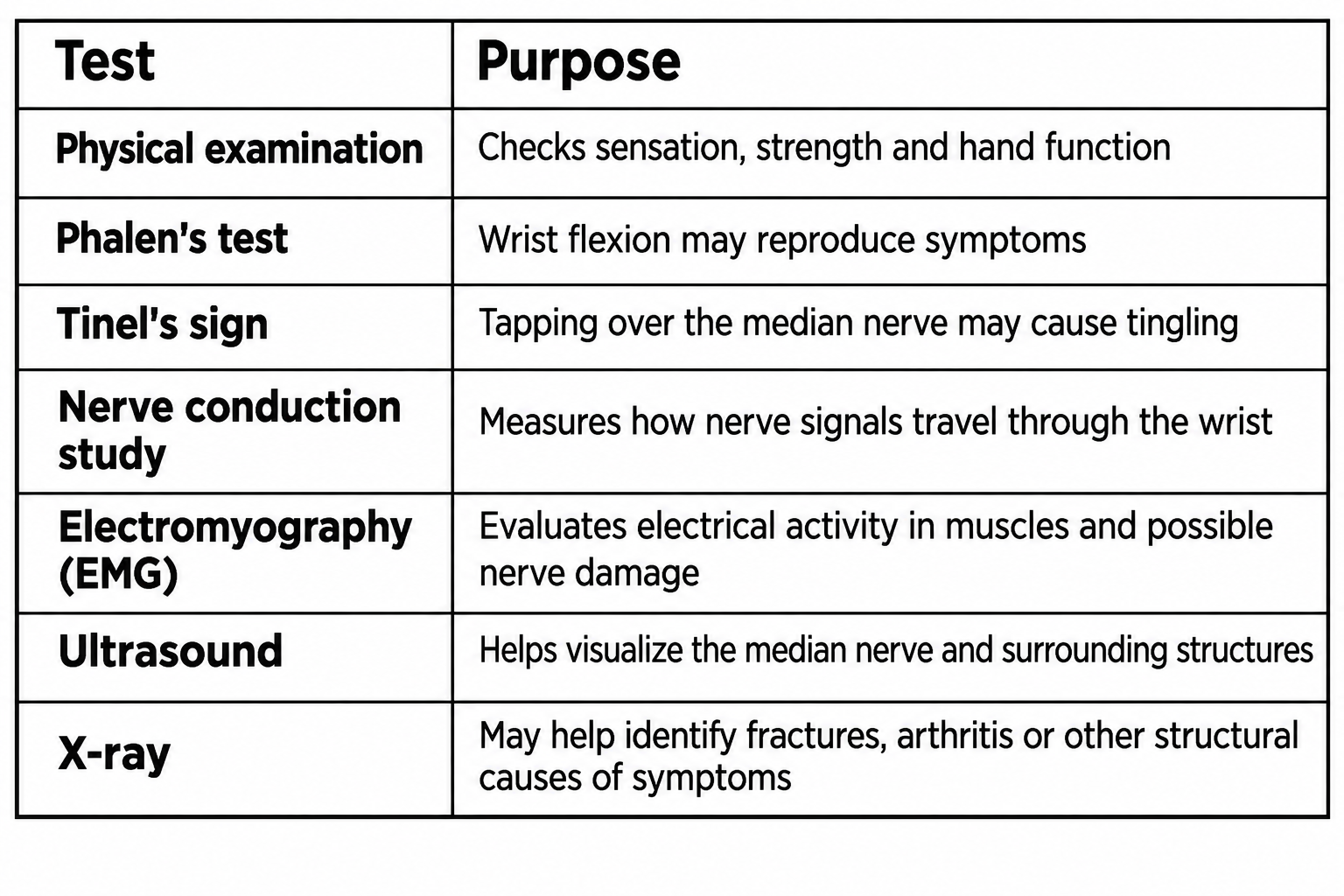
Not every patient needs every test. The doctor determines which investigations are appropriate based on the symptoms and clinical examination.
Carpal Tunnel Syndrome Treatment: What Are the Options?
Treatment depends on the severity of symptoms, the duration of nerve compression and whether weakness or nerve damage is present.
Early or mild cases may improve with non-surgical treatment. More severe or persistent cases may require surgery to relieve pressure on the median nerve.
Treatment Options
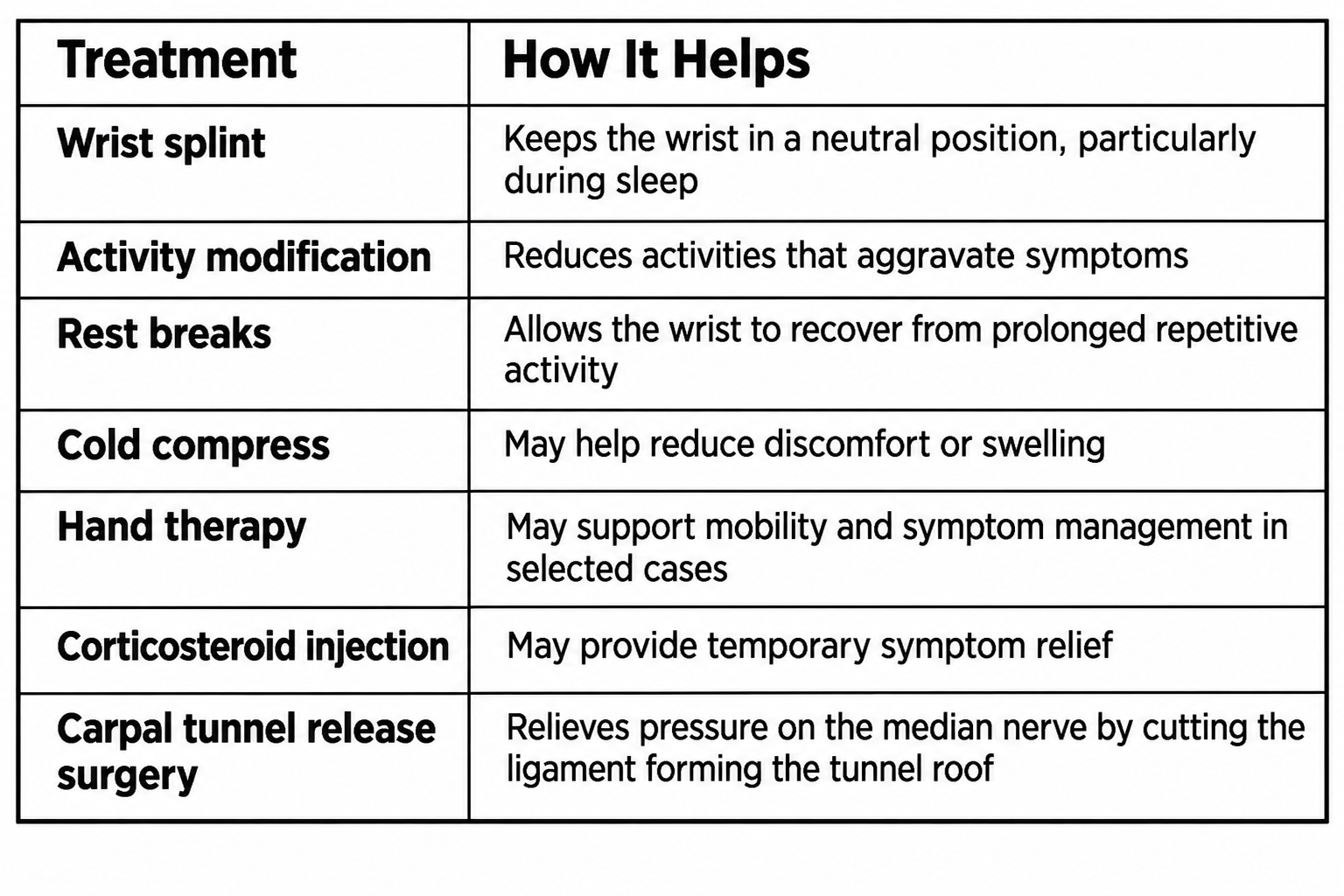
Non-Surgical Treatment
Non-surgical treatment is often considered first when symptoms are mild to moderate and there is no significant muscle weakness or evidence of severe nerve damage.
1. Wrist Splinting
A wrist splint is commonly worn at night to keep the wrist straight or in a neutral position.
It may help reduce pressure on the median nerve and improve night-time symptoms.
2. Activity Modification
Patients may be advised to:
- Avoid prolonged wrist bending
- Reduce forceful gripping
- Take regular breaks during repetitive activities
- Avoid placing prolonged pressure on the wrist
- Adjust workstations and hand tools where possible
3. Medicines
Pain-relieving medicines may help manage discomfort for short periods in certain patients. However, they do not necessarily relieve the underlying nerve compression.
Medicines should be used based on individual medical suitability and professional advice.
4. Corticosteroid Injection
A corticosteroid injection into the carpal tunnel may reduce inflammation and temporarily relieve symptoms.
However, injections are not necessarily a permanent solution, and symptoms may return. They may be considered depending on the severity and clinical situation.
Carpal Tunnel Syndrome Surgery
Carpal tunnel release surgery may be recommended when:
- Symptoms are severe
- Numbness is persistent
- Hand weakness is increasing
- Muscle wasting is developing
- Non-surgical treatment has not provided sufficient relief
- Nerve testing suggests significant compression
What Is Carpal Tunnel Release Surgery?
Carpal tunnel release is a procedure performed to relieve pressure on the median nerve.
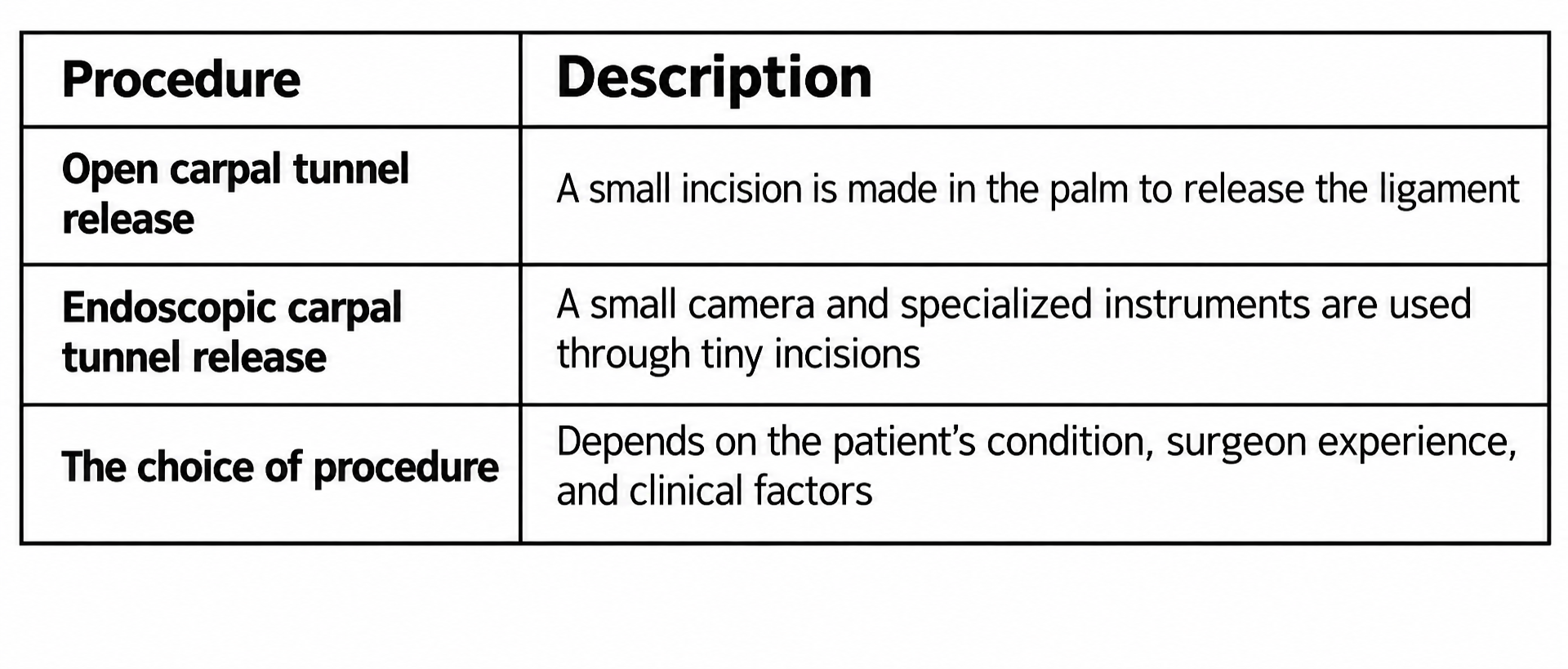
During surgery, the surgeon cuts the ligament forming the roof of the carpal tunnel. This increases space within the tunnel and reduces pressure on the median nerve.
Types of Carpal Tunnel Surgery
Benefits of Surgery
Surgery may help:
- Reduce numbness and tingling
- Relieve night-time symptoms
- Improve hand function
- Improve grip strength in some patients
- Prevent further nerve damage in appropriate cases
Recovery varies depending on the severity and duration of nerve compression. Pain and numbness may improve at different rates, and longstanding nerve damage may not completely recover.
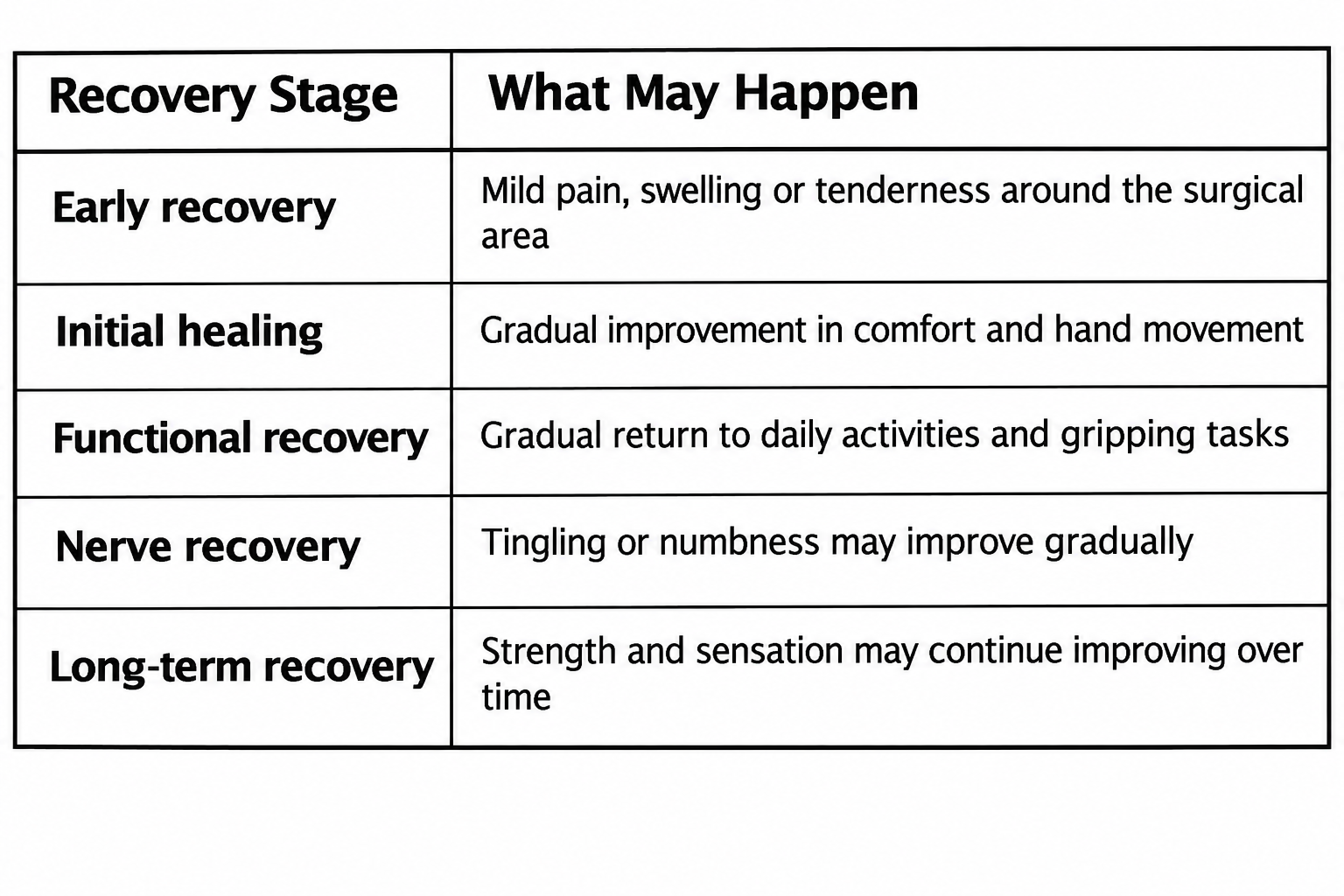
Recovery After Carpal Tunnel Surgery
Recovery depends on the surgical technique, severity of the condition and the patient's overall health.
What to Expect During Recovery
Recovery Tips
- Follow the surgeon's wound-care instructions.
- Keep the surgical area clean and protected.
- Avoid heavy gripping until cleared.
- Perform hand movements and exercises as recommended.
- Attend follow-up appointments.
- Do not rush back to heavy manual work.
Some people experience improvement relatively quickly, while patients with longstanding nerve compression may need considerably more time.
Can Carpal Tunnel Syndrome Be Prevented?
Not all cases can be prevented, but certain measures may help reduce wrist strain and aggravation of symptoms.
Daily Habits for Wrist Health
- Keep your wrist in a comfortable, neutral position.
- Avoid prolonged bending of the wrist.
- Take short breaks during repetitive activities.
- Avoid excessive force while gripping tools.
- Use properly designed tools and ergonomic equipment.
- Avoid sleeping with your wrists tightly bent.
- Stretch or move your hands gently during work breaks.
- Seek medical attention if numbness or tingling persists.
Workplace Ergonomics
If you work for long hours using a keyboard, mouse or hand tools:
- Adjust your desk and keyboard height.
- Avoid resting your wrist against hard edges.
- Keep your shoulders relaxed.
- Use tools that fit comfortably in your hand.
- Take regular movement breaks.
Ergonomic adjustments may improve comfort and reduce aggravation, although they are not guaranteed to prevent carpal tunnel syndrome.
Care at Global
When Should You Consult a Doctor?
You should consult a medical professional if:
- Numbness or tingling continues for several days or keeps returning.
- Pain is disturbing your sleep.
- You are experiencing weakness in your hand.
- You are frequently dropping objects.
- Your thumb strength is decreasing.
- You are struggling with writing, gripping or everyday tasks.
- Symptoms are becoming progressively worse.
Early evaluation is particularly important when symptoms are persistent because prolonged compression of the median nerve can lead to irreversible nerve damage in some cases.
Conclusion
Carpal Tunnel Syndrome is a common nerve compression condition caused by pressure on the median nerve at the wrist. It can lead to tingling, numbness, wrist pain, weakness and difficulty performing everyday activities.
Although mild cases may improve with wrist splinting and activity modification, persistent or severe nerve compression may require surgical treatment. Ignoring progressive numbness or weakness can increase the risk of lasting nerve damage.
Recognizing the symptoms early, getting an accurate diagnosis and choosing the right treatment can help protect hand function and improve quality of life.
If you are experiencing persistent hand numbness, wrist pain or weakness, consult a specialist for proper evaluation and treatment.
Frequently Asked Questions (FAQs)
1. What is the first symptom of carpal tunnel syndrome?
The first symptom is often tingling or numbness in the thumb, index finger and middle finger. Symptoms frequently occur at night or when waking up. Some people initially notice the sensation while holding a phone, driving or performing activities that involve bending the wrist.
2. Can carpal tunnel syndrome go away on its own?
Mild cases may improve, especially when associated with temporary factors such as pregnancy-related fluid retention. However, persistent nerve compression may worsen over time. If symptoms continue, recur frequently or cause weakness, medical evaluation is recommended rather than relying only on home treatment.
3. Does carpal tunnel syndrome require surgery?
No. Many patients initially receive non-surgical treatment such as wrist splinting, activity modification and other appropriate measures. Surgery may be recommended when symptoms are severe, nerve damage is suspected or non-surgical treatment does not provide sufficient relief.
4. Is carpal tunnel syndrome caused by mobile phones or computers?
Computer use and mobile phone use are not definitively established as direct causes of carpal tunnel syndrome. However, prolonged wrist positions or repetitive activities may aggravate symptoms in some individuals. Maintaining a comfortable wrist position and taking regular breaks may help.
5. Can carpal tunnel syndrome cause permanent damage?
Yes. If significant median nerve compression continues for a long time, it may cause persistent numbness, thumb weakness and muscle wasting. Some nerve damage may not fully recover. Early diagnosis and appropriate treatment can reduce the risk of long-term complications.